Floating vs Freestanding: Choosing a Modern Bathroom Vanity
A floating vs freestanding bathroom vanity decision changes the room before you notice the style. A floating cabinet leaves the floor visible, so the vanity reads lighter, while a freestanding one gives the room a stronger furniture-like anchor. We recommend choosing between those effects only after you've checked wall structure, plumbing, storage habits, actual cabinet depth, and finished sink height, because those are the details you'll live with long after the install photos are gone.
The BathGem's Blueprint
Start with the room, not the silhouette. If uninterrupted floor makes the bathroom feel less crowded and the wall can support the vanity's specified mounting system, floating is usually the better call. If existing rough-ins, wall conditions, or cabinet volume near the floor matter more, freestanding is usually easier to work around. The mistake that changes the outcome is setting cabinet height before sink height: a vessel basin adds height above the counter, so the cabinet has to be planned around the finished rim, not mounted first and corrected later.
Floating vs Freestanding Bathroom Vanity: What Actually Changes?

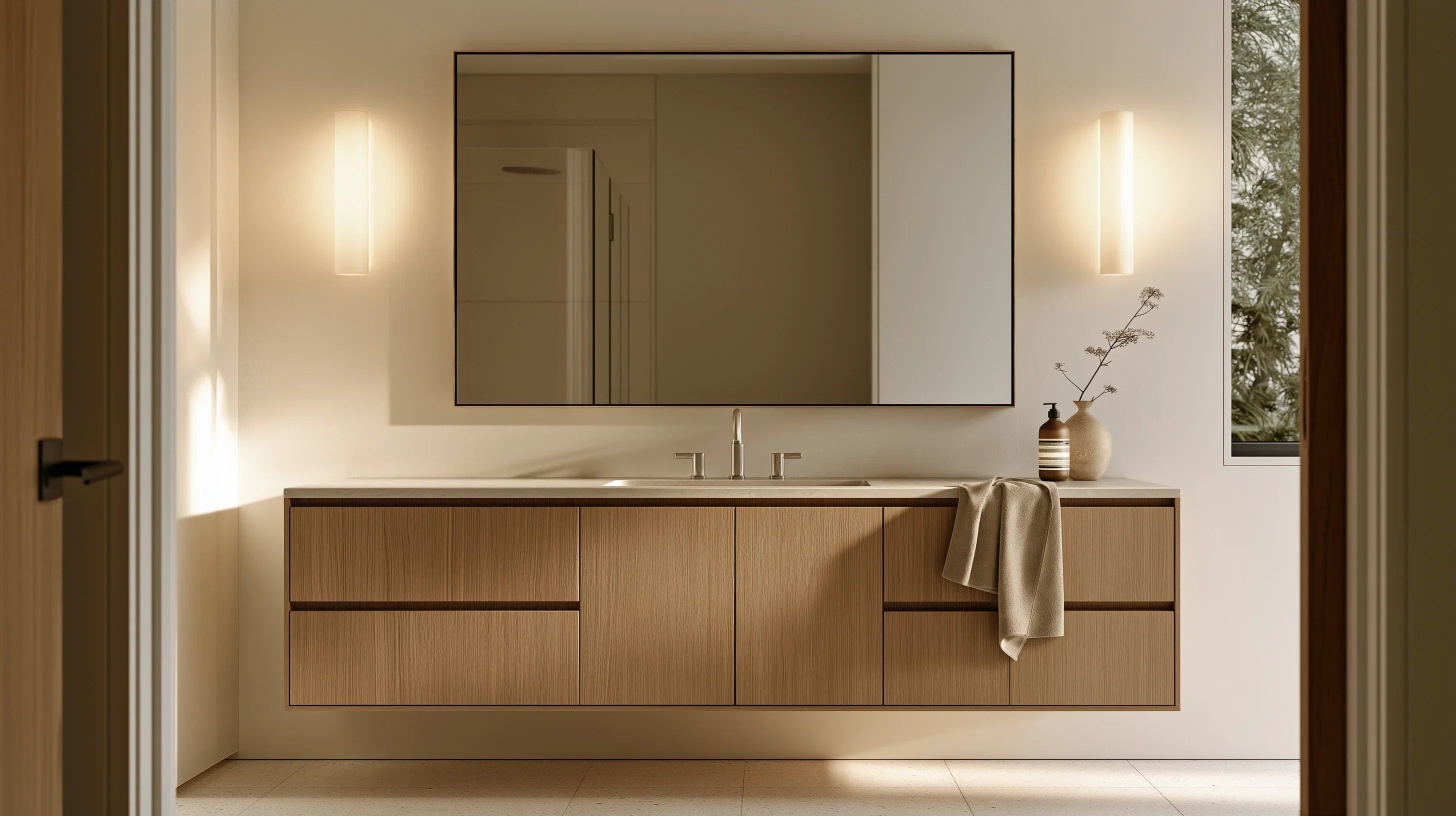
A floating vanity attaches to the wall without a cabinet base extending to the floor. That strip of visible flooring sounds minor on a specification sheet, but your eye reads uninterrupted floor as breathing room. In a narrow bathroom, the vanity can feel less intrusive without getting any smaller.
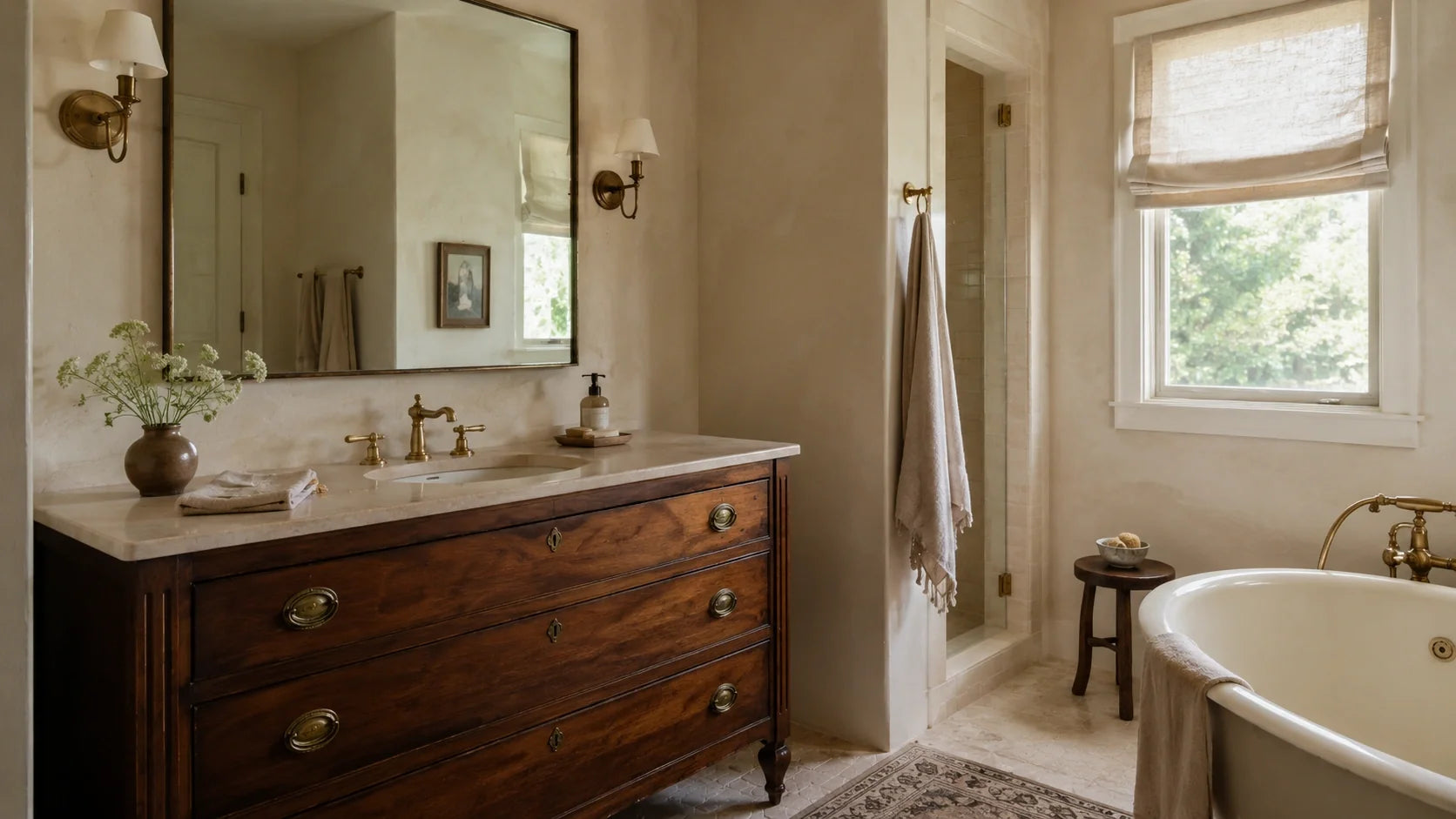
A freestanding vanity carries more of its visual weight toward the floor. That works particularly well in a generous primary bath where a very light cabinet can look underscaled beneath a wide mirror, tall shower glass, or a broad expanse of tile.
The smart move is to stop treating floating as shorthand for modern. Slab-front drawers, restrained hardware, white oak, walnut, matte lacquer, and simple quartz tops can make either format feel current. The format should solve the room first.
| Decision | Floating | Freestanding |
|---|---|---|
| Visual effect | Lighter, more architectural | Grounded, furniture-like |
| Wall planning | Structural support and the specified mounting method are central to the installation | The cabinet bears on the floor, but manufacturer-required wall anchoring may still apply |
| Plumbing tolerance | Drawer geometry can leave less room for low or off-center rough-ins | Often gives the installer more cabinet volume around an existing rough-in |
| Cleaning | Open floor is easy to sweep or mop | Toe kicks, legs, or lower trim can create more edges to clean around |
| Finished height | Set during installation within the product's requirements | Mostly established by cabinet, top, and sink construction |
| Best reason to choose it | The negative space under the cabinet changes the room | The room needs an anchor or the existing conditions favor a floor-standing cabinet |
Floating Bathroom Vanity Pros and Cons Go Beyond Floor Space

The strongest argument for a floating bathroom vanity is visual breathing room. You see flooring beneath the cabinet instead of a solid block extending from countertop to floor, which matters most when the vanity sits directly in your sightline from the doorway.
Cleaning underneath is simpler too. There's no toe kick collecting dust along the edge and no furniture legs forcing a mop into tight corners. The trade-off is easy to miss in a styled photograph: the wall becomes part of the vanity.
A Wall-Mounted Vanity Makes the Wall Do Real Work
A wall-mounted vanity needs the support specified for that model. The fastening method, stud locations, backing, rail, and hardware can vary, so the manufacturer's installation instructions should control the framing plan.
If you're renovating down to the studs, choose the actual vanity before the wall is closed. Your installer can then coordinate support, plumbing, and mounting points around the cabinet instead of discovering after tile that the fasteners land where the structure doesn't.
For a useful product-specific example, Kohler's installation instructions for a vanity designed for wall-hung or legged installation require the wall-hung configuration to fasten into stud framing and call for concealed 2x8 support when the stated stud locations can't be met. That's an example of how specific these requirements can be, not a universal framing rule for every floating vanity.
Avoid the mistake
Don't approve drywall or tile before confirming how the vanity attaches to the wall. The cabinet can look almost weightless once it's installed, but the structure behind it isn't optional.
Plumbing Becomes Part of the Composition
A freestanding cabinet often gives you more lower cabinet volume to work around an existing drain and supply lines. A floating cabinet, especially one built around drawers, can be less forgiving of a drain that's too low, a supply line outside the cabinet opening, or a P-trap that lands directly behind a full-depth drawer.
This is where most buyers get into trouble. They compare the front of two vanities and never look at the rear opening or drawer diagram, then discover that the plumbing wants the same space as the storage.
Check the rear cabinet drawing, drawer cutouts, drain position, and supply locations before ordering. The front elevation tells you how the vanity photographs. The back tells you whether it works in your bathroom.
Explore our Floating Bathroom Vanities

72" Double Sink Bathroom Vanity with Top in Chestnut - James Martin Marcello

72" Double Sink Bathroom Vanity with Top in Mid-Century Walnut - James Martin Amberly

60" Double Sink Bathroom Vanity in Mid-Century Walnut - James Martin Amberly

60" Laurent Single Vanity in Light Natural Oak by James Martin Vanities


Modern Bathroom Vanity Styles Don't Depend on the Base

Freestanding bathroom vanities don't automatically read traditional. A floor-standing cabinet with slab fronts, precise reveals, restrained pulls, and a quiet quartz top can look more modern than a busy floating cabinet with too many competing details.
Freestanding is often the stronger choice when the room needs an anchor. In a primary bathroom with generous floor area, the extra visual weight can balance a large mirror, a glass shower enclosure, and broad expanses of stone or tile.
It's also a smart retrofit when the existing drain and supplies already land cleanly inside the cabinet cavity. We'd rather see you use a properly scaled freestanding vanity than spend heavily forcing a floating cabinet into wall and plumbing conditions that fight it.
Storage Is About Drawer Geometry, Not Cabinet Height
"Freestanding has more storage" sounds useful until you open the doors. A tall cabinet with a large plumbing cavity can offer plenty of volume while still making everyday items difficult to reach.
A floating vanity with deep drawers may work harder because your toiletries come toward you. You can see skincare, brushes, hair tools, and spare products from above instead of crouching on the floor to find a bottle behind the P-trap.
We recommend judging storage by the drawer diagram, not the exterior dimensions. Look at how the sink and drain interrupt each drawer, whether the drawer is full depth, and where taller bottles will actually stand.
Sink Type Changes the Storage Equation
An undermount or integrated sink keeps the counter profile quiet, which works particularly well with a minimalist bathroom vanity. The bowl and plumbing still occupy cabinet space below, so check the drawer cutouts rather than assuming a clean countertop means uninterrupted storage underneath.
A vessel sink changes the geometry in the other direction. The basin sits above the top, so the cabinet may need to mount lower to keep the finished rim comfortable, and the bowl consumes counter area that could otherwise hold soap, grooming products, or a small tray.
This is a common showroom-to-real-life mistake. You notice the sculptural bowl on day one. A few months later, you notice where your toothbrush, skincare, and hand soap have nowhere to go.
Vanity Clearance and Height Need to Be Planned Together

Vanity clearance and height are several measurements hiding inside one decision. You have actual cabinet width and depth, countertop height, finished sink-rim height, and, with floating cabinetry, the open space between the cabinet and floor.
Don't choose a floating mounting position from cabinet height alone. Start with where you want the finished washing surface, account for the countertop and sink, then work backward to the cabinet. Vessel sinks need the most attention because the basin adds height above the top.
If you lower the cabinet for a vessel sink or change the vanity height from the original plan, recheck the mirror, medicine cabinet, wall-mounted faucet, outlet locations, and sconce boxes before the wall is finished. A sink height can feel right while the rest of the vanity wall suddenly feels off.
The gap underneath needs intention too. A narrow strip can look accidental while still being annoying to clean. More deliberate clearance makes the floating construction readable from across the room and lets the flooring become part of the composition.
Measure These Before You Order
- Actual vanity width and depth, not the wall opening alone
- Desired finished sink or countertop height
- Bathroom and shower door swing
- Toilet and circulation clearance
- Drain and supply-line locations
- Mirror, medicine cabinet, outlet, and sconce relationship above the vanity
- Structural support required by the vanity manufacturer
- Baseboard, casing, and wall conditions that could interfere with a flush installation
Once those measurements are real, use the bathroom vanities by size hub to compare cabinets that fit the room instead of asking the room to fit the cabinet.
Which One Makes a Small Bathroom Feel Bigger?

We usually favor floating, but only when the open floor is visible enough to matter. Seeing tile continue underneath reduces the amount of solid cabinetry your eye encounters, which is useful in a narrow guest bath or powder room.
Don't shrink the vanity unnecessarily just to amplify that effect. A slightly wider floating cabinet with useful drawers can be a better small-bath decision than an undersized cabinet that pushes bottles, towels, and hair tools onto every available surface.
In a narrow bathroom, depth is often the dimension you feel most as you pass the vanity. Tape the actual width and depth onto the floor, then open the bathroom door, shower door, and nearby drawers. A vanity can fit perfectly between two walls and still make the room irritating to move through.
Modern Double Vanity: Floating or Freestanding?

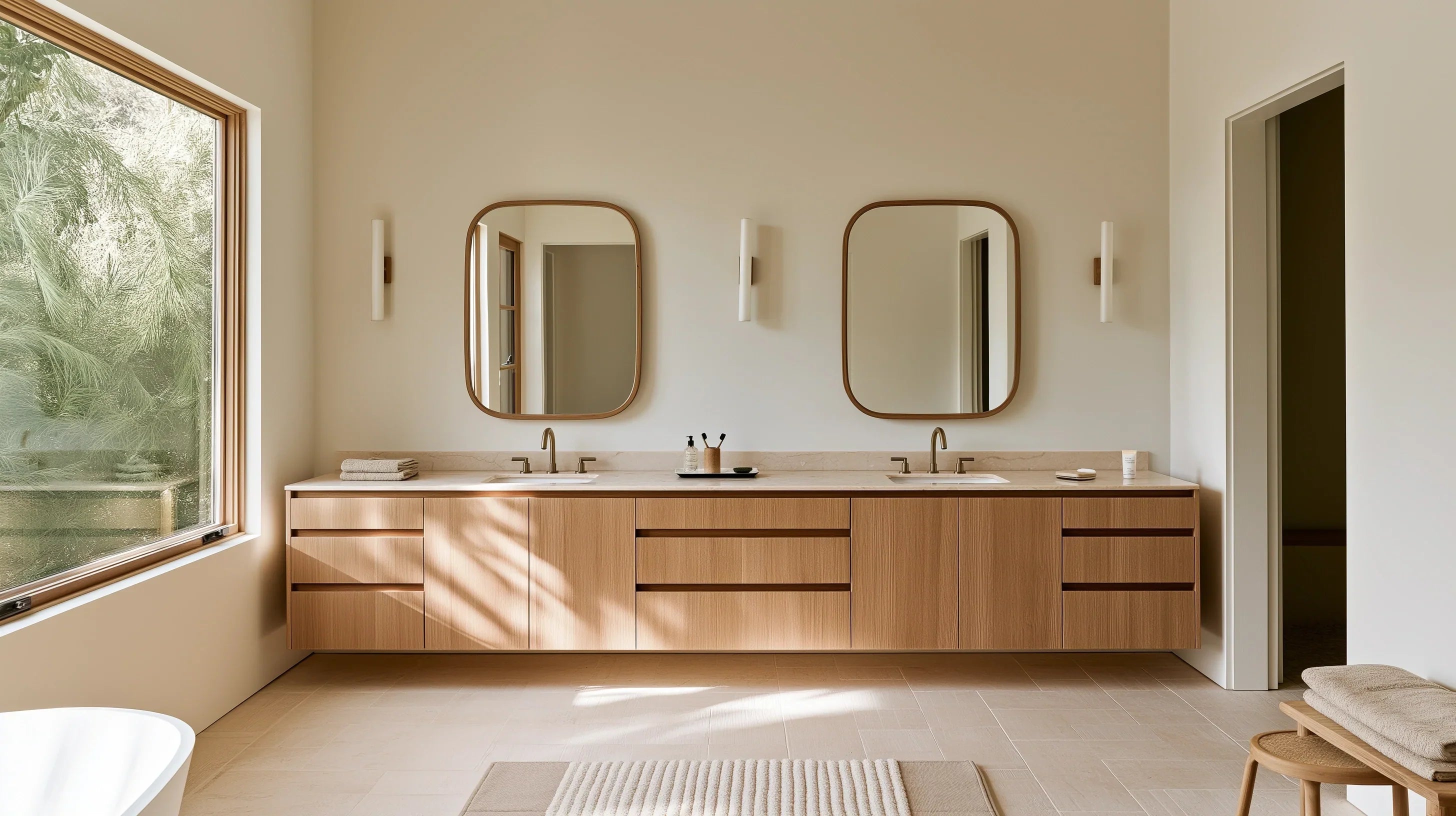
Once you're shopping a modern double vanity at 60 inches and wider, we'd decide from room scale and installation conditions before style. A floating double creates a long horizontal line beneath a wide mirror or paired mirrors, particularly when continuous tile flooring is worth keeping visible.
The wider the wall-mounted cabinet, the less we'd leave to assumption. Confirm the manufacturer's fastening method, framing, plumbing positions, countertop configuration, sink spacing, and drawer clearances before the wall is finished.
A freestanding double gives a larger bathroom more visual weight. White oak or walnut works particularly well here because the grain lets the piece read as furniture rather than a large storage box.
We also recommend questioning the second sink before assuming you need it. Two basins consume drawer width and counter space. If the room can't give two people comfortable working space, one generous sink with better storage can make the morning routine easier.
Modern Vanity Materials Change How Each Format Reads

White oak is particularly convincing on floating cabinetry because the grain brings warmth to a form that can otherwise feel clinical. You get visible wood character without carrying a solid block of cabinetry all the way to the floor.
Walnut has more visual gravity. Suspended against pale tile it creates contrast, while a freestanding walnut cabinet becomes a stronger furniture moment and can hold its own in a larger primary bath.
White behaves differently again. A white vanity cabinet against a pale wall visually recedes, and a floating version pushes that effect further because the floor remains visible underneath. We'd use that combination when you want the architecture, mirror, or stone to carry more of the room.
For the countertop, keep the relationship disciplined. Quiet quartz or lightly veined stone gives strong wood grain room to register. If the top has active veining, simpler cabinet fronts keep the vanity from getting visually noisy.
Glossy surfaces make fingerprints and dried water easier to see under direct vanity lights. Natural grain and lower-sheen finishes are generally more forgiving of hurried splash marks, so view finish samples under the lighting you'll actually use at the mirror whenever you can.
Floating versus freestanding doesn't replace moisture management. In either format, use the bathroom's ventilation, wipe standing water from the cabinet and top, and follow the manufacturer's care instructions, especially when the vanity sits close to a shower.
Floating Is Better When the Floor Matters

Some rooms make the floating decision for you. If you've invested in continuous limestone, large-format porcelain, or patterned tile and want the material to remain visible, a wall-mounted cabinet lets the floor keep moving beneath the vanity instead of stopping visually at its base.
The open floor changes what you see, not how far the vanity projects into the room. A floating cabinet doesn't create more walking clearance by itself, so actual depth still matters in a tight plan.
We recommend floating when the negative space is doing real design work. It should reveal a material worth seeing, reduce the visual mass of a cabinet that would otherwise dominate the wall, or make cleaning the floor meaningfully easier. If you barely see beneath the cabinet from the doorway, the installation complexity may not buy you enough.
Freestanding Is Better When the Room Needs Weight

A large bathroom can have the opposite problem. Tall ceilings, broad tile walls, a large shower enclosure, and a long mirror can make a small floating cabinet look tentative.
A properly scaled freestanding vanity gives those surfaces an anchor. The effect is especially strong in white oak or walnut because the cabinet reads as a piece of furniture rather than another plane attached to the wall.
It's also often the more forgiving choice when you're renovating around an existing rough-in and a finished wall, provided those lines land inside the cabinet's usable opening. Don't assume freestanding means no wall attachment, though. Many floor-standing vanities still need to be secured according to the manufacturer's instructions, and any levelers or anti-tip hardware are model-specific.
The Verdict: Start With the Room, Not the Vanity

Choose floating when the open floor does real design work and you can coordinate support, plumbing, finished sink height, and drawer clearance early. Choose freestanding when the room needs more furniture-like weight or the existing wall and rough-in conditions make a floor-standing cabinet the cleaner fit.
Style is a separate decision. Slab fronts, restrained hardware, precise proportions, and specific materials can make either format feel current, so use the modern bathroom vanity collection only after width, depth, plumbing, and finished height are fixed.
Explore our Modern Bathroom Vanities
72" Double Sink Bathroom Vanity with Top in Chestnut - James Martin Marcello

66" Strada Double Bathroom Vanity in White with Brushed Nickel Trim by Wyndham

66" Strada Double Bathroom Vanity in Light Green with Matte Black Trim by Wyndham

66" Strada Double Bathroom Vanity in Light Green with Satin Bronze Trim & 58" Mirror by Wyndham


Before you order, tape the vanity's full width and depth onto the bathroom floor and mark the finished counter or sink-rim height on the wall. Open every nearby door and drawer, then stand where you'll actually brush your teeth. Five minutes inside those lines will tell you more about the right vanity than another hour of front-facing product photos.
If width is the last open question, read The Most Popular Bathroom Vanity Sizes next and compare the number you like against the clearance your bathroom actually gives you.
Frequently Asked Questions

Todd Harmon
Floating and freestanding vanities can both read modern. Todd looks first at how the cabinet meets the wall, floor, plumbing, and daily routine, because those conditions decide whether the piece feels easy or fussy once the bathroom is in use. With over two decades in e-commerce and product curation, Todd built BathGems on a simple idea: a bathroom should feel as collected and considered as the rest of the home. He sources every vanity and fixture in the BathGems catalog the way a designer pulls samples, weighing material, proportion, finish quality, and how a piece actually lives in a real room over time.