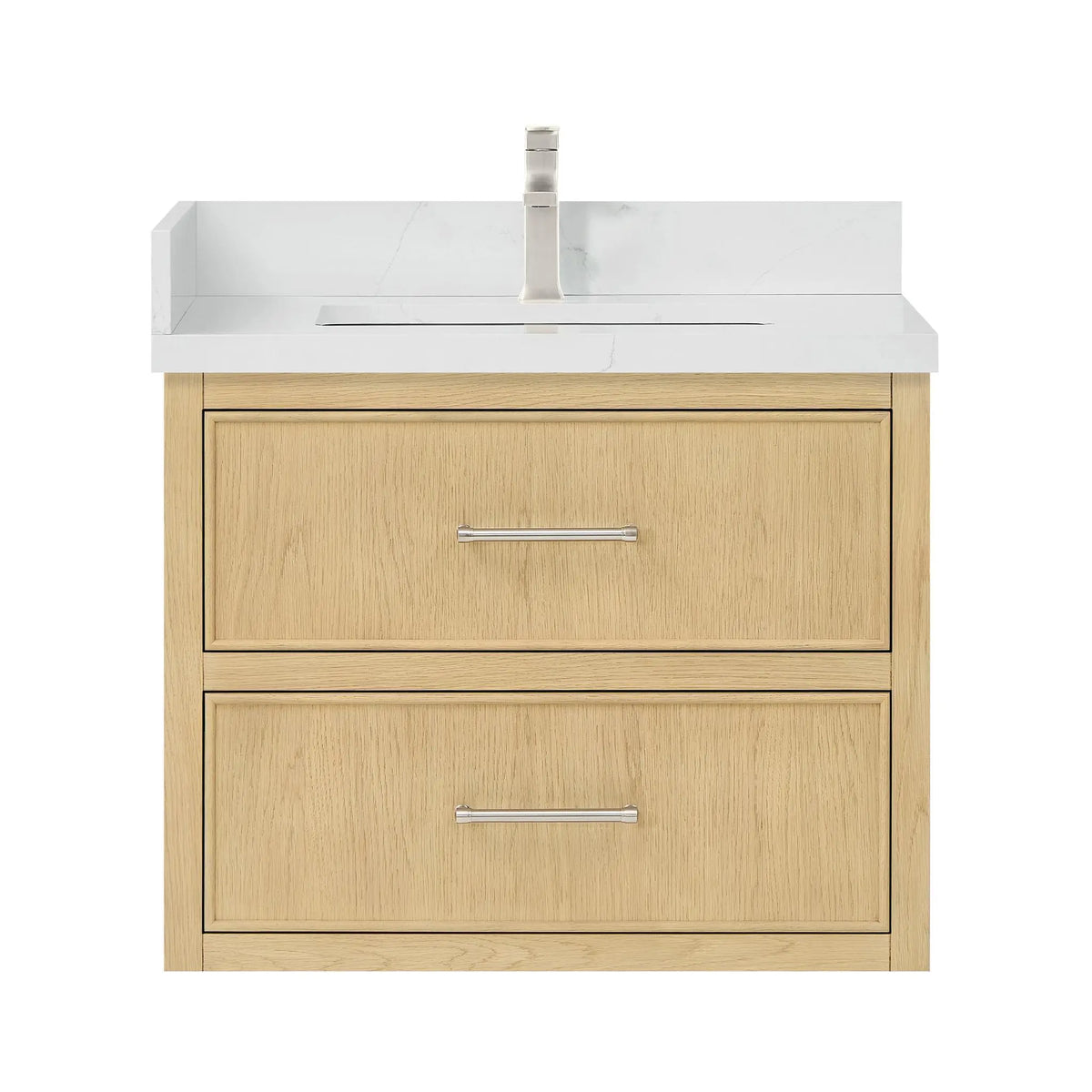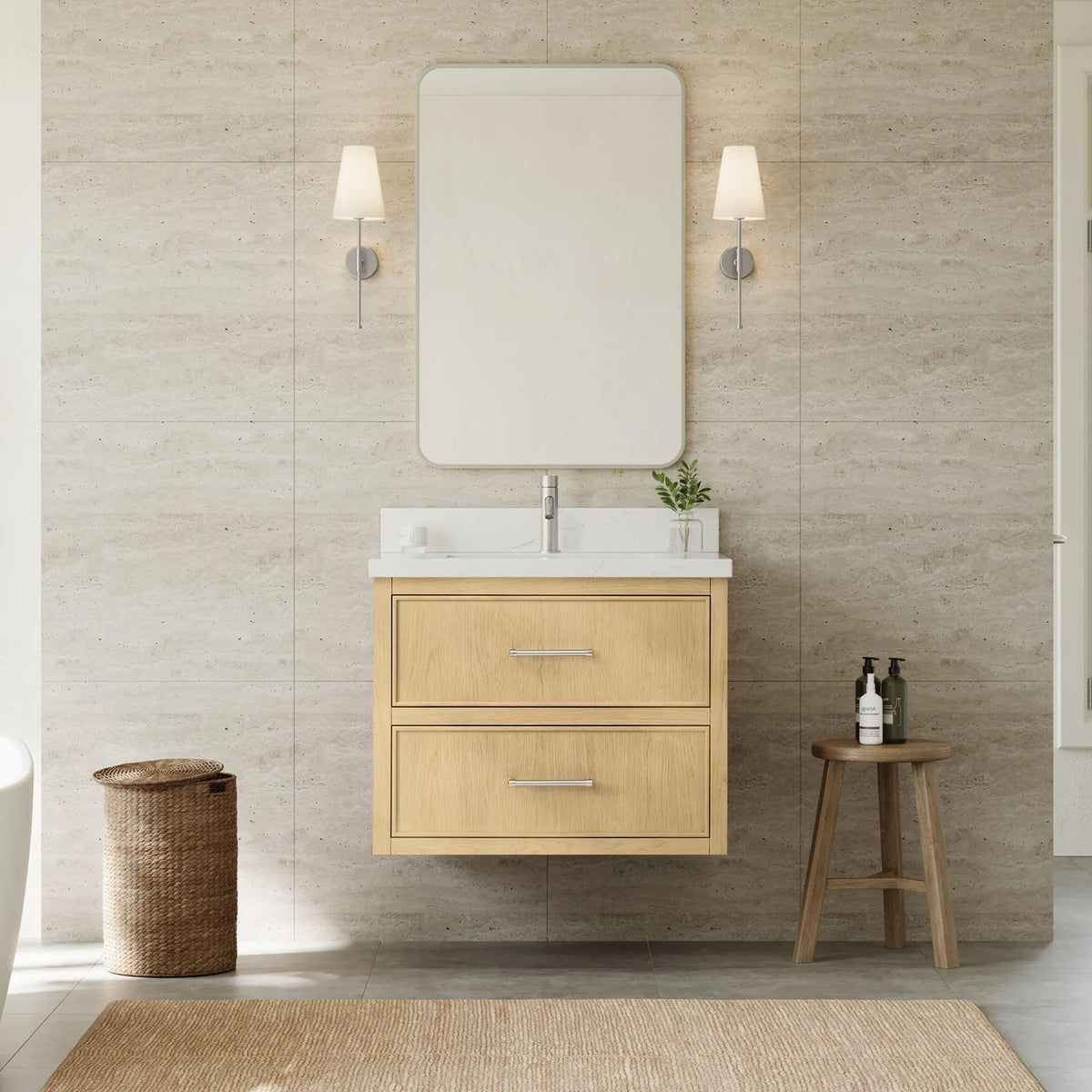
30 Inch Floating Bathroom Vanity
30" Floating Vanity: The Single Best Small-Bathroom Upgrade
A floating vanity (wall-mounted, feet-off-the-floor) is the single most effective way to make a small bathroom feel bigger. The continuous floor visible underneath tricks the eye into reading more square footage, and the reduced visual weight lets the rest of the room breathe. At 30 wide, you get that spatial effect without giving up meaningful storage. It's why designers specify floating vanities in virtually every small bathroom renovation where the budget allows for proper wall preparation.
Why 30" Floating Works
At 24 floating, storage is tight enough to feel like a compromise. At 36+ floating, structural requirements get serious (heavier cabinets need more blocking, the mounting hardware has to scale). 30 is the sweet spot: enough cabinet to hold daily essentials, light enough that standard blocking handles the load, small enough that the floating effect reads dramatically. The vanity appears to hover, which creates a visual gap between the furniture and the floor that makes the room feel open and airy. This effect is especially powerful in bathrooms under 50 square feet where every visual trick counts.
Structural Requirements (Non-Negotiable)
Horizontal 2x8 or 2x10 blocking between two studs minimum, placed at the mounting height (typically 18 to 20 AFF for the top of the blocking). If you can't confirm blocking exists inside the wall, you need to open the wall before ordering. A 30 floating vanity loaded with top, sink, and contents weighs 100 to 150 lbs, all of it hanging from the wall. Drywall anchors alone will not hold. This is not optional and not a place to cut corners. If you're working with a contractor during a renovation, adding blocking takes 15 minutes while the wall is open. Retrofitting blocking after drywall is patched adds a full day of work and repair.
Plumbing Rough-In
Floating vanities look best when the plumbing exits the wall (not the floor). A wall-exit drain and supply keep everything hidden behind the vanity. If your drain currently comes through the floor, the conversion is worth doing during renovation. A floor drain below a floating vanity is visible and undercuts the clean aesthetic you're paying for. Budget $300 to $600 for a plumber to convert floor plumbing to wall-exit, depending on accessibility and local rates. Supply lines should exit the wall at 20 to 22 from the finished floor, centered behind the vanity location.
Storage at 30" Floating
Most 30 floating vanities offer either two soft-close doors with an interior shelf or one large drawer over one small drawer. The drawer configuration is more functional for daily items. A top shallow drawer (3 inches deep) handles toothbrush, razor, and small products. The bottom deep drawer (8 to 10 inches) handles towels, hair tools, and backup supplies. Behind-door configurations work for taller items but require reaching around the drain pipe. For additional storage beyond what the vanity provides, add a recessed medicine cabinet above the sink and a small wall-mounted shelf or basket beside the mirror.
Style Matching
Floating vanities inherently read modern or contemporary. A white bathroom vanity in a matte or high-gloss finish is the classic floating choice and works in almost any small bathroom. A natural wood bathroom vanity in walnut, white oak, or teak adds warmth to the modern profile and pairs well with matte black hardware. Avoid ornate or heavily detailed door fronts on floating vanities. The floating mount is a modern design element, and traditional styling creates a visual contradiction that makes the piece look indecisive rather than intentional.
Finish Options
Matte white, matte gray, walnut veneer, and white oak veneer are the four most popular floating vanity finishes. Matte finishes hide water spots better than gloss. Wood veneers need to be factory-sealed for bathroom humidity. If the manufacturer doesn't specify a moisture-rated finish, ask before buying. An unsealed veneer floating vanity will delaminate at the edges within two years in a bathroom that sees daily shower steam. High-pressure laminate (HPL) surfaces are the most durable option and mimic wood grain convincingly while resisting moisture, scratches, and staining.
Install Notes
A 30 floating vanity weighs 40 to 70 lbs without the top. Mount the cabinet bracket or French cleat to the blocking first, level it precisely, then hang the cabinet. Set the top dry to confirm alignment before applying silicone adhesive. Connect the wall-exit drain to a P-trap inside the cabinet and attach supply lines to the shutoff valves. The entire install takes 2 to 3 hours for someone comfortable with basic plumbing and a level. If the blocking and plumbing rough-in are already in place, this is a realistic weekend DIY project.
Free shipping over $200
30-DAY SATISFACTION
Secure payments