Antique Bathroom Vanity Styles: Victorian, Farmhouse, and Vessel Looks
An antique vanity is the piece people stop and touch. The carved apron, the worn brass, a marble top with a little history in it, that's the stuff that makes a bathroom feel collected instead of assembled. It carries a room the way a good rug or an old mirror does. The right antique bathroom vanity styles give you that character without making daily use harder.
The BathGems Brief
Antique is a look with three main dialects. Pick the one that matches your room, then sort out the plumbing and the finish.
- Victorian is dressy. Carved wood, a marble top, cabriole legs, and ornate brass. The formal one.
- Farmhouse is relaxed. Distressed or antique-white paint, simpler lines, glass or bin-pull hardware.
- The dresser look is a real chest with a vessel sink on top, all character and a little plumbing surgery.
- Style beats sourcing. A true antique brings water headaches; an antique-style piece gives you the look, built for a wet room.
Antique bathroom vanity styles are not one thing. A carved Victorian washstand, a chalk-painted farmhouse chest, and a repurposed dresser with a vessel sink create three very different rooms. Knowing which look you're after, and what each one asks of you, is the difference between buying something charming and living comfortably with it.
The Antique Bathroom Vanity Styles Worth Knowing

Powered by AURA Modern Home Hotspot Builder
The word antique gets used loosely in bathrooms. Strictly, an antique is a hundred years old or more and a vintage piece is a few decades, but most people shopping for the look care less about the birthday and more about the feeling: patina, real wood, a sense that the piece had a life before your bathroom. That feeling comes in a handful of recognizable styles, and a good antique bathroom vanity leans clearly into one rather than muddling them together.
Below are the three looks worth knowing, plus the honest question underneath all of them: real antique, or antique style? Get the style right first, and the sourcing decision gets much easier.
Buy the piece for the bathroom you actually have, not the century you're picturing.
The Victorian Bathroom Vanity: Formal and Carved

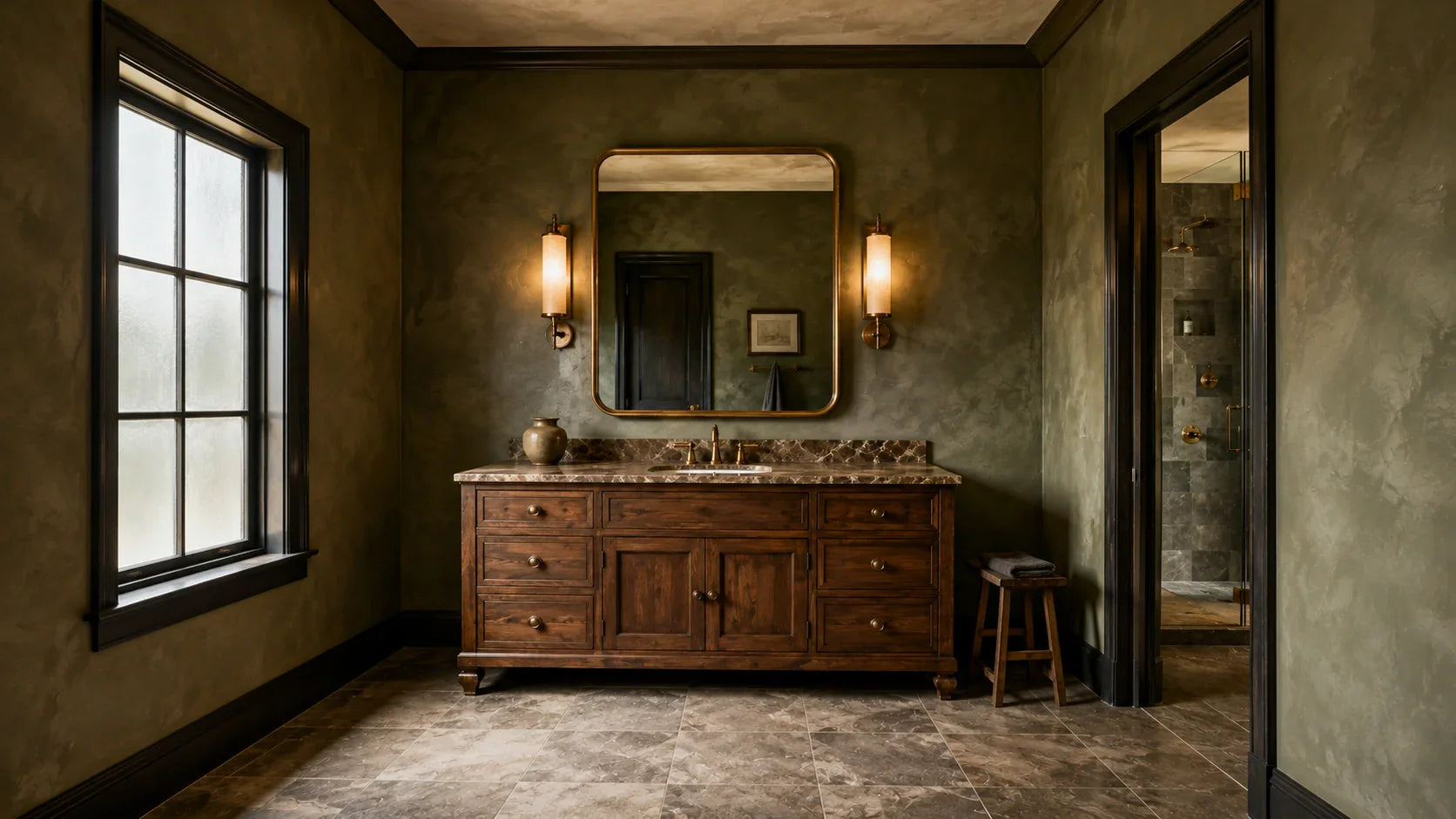
Victorian is the dress-up option. Look for a freestanding, furniture-like piece in mahogany or walnut, with a marble top, turned or cabriole legs, and substantial brass hardware. Nothing about it should read built-in.
The smart move is to let the carving carry the room. Honed Carrara, an arched mirror, and creamy walls give the detail enough quiet space to register, while deep burgundy paint and ornate pattern on every surface can tip the room into costume.
A cast-iron clawfoot tub and black-and-white mosaic floor can support the period character without copying it. Repeat one detail, such as the vanity's brass tone or curved leg, and stop there. The room will feel collected, not themed.
Designer tip
Victorian carving casts real shadows, so it needs warm, layered light to read as rich instead of heavy. Use sconces near mirror height rather than relying on one ceiling fixture. Flat top light erases the detail you paid for.
The Farmhouse Antique Vanity: Relaxed and Painted

Where Victorian dresses up, farmhouse settles in. This is the softer branch of antique style, with painted or distressed wood, simple lines, and hardware that could have come from an old kitchen cupboard. It suits a cottage, a transitional bath, or any room where you want warmth without formality. Much of the farmhouse bathroom vanity world lives here.
The Antique White Vanity and Distressed Finishes
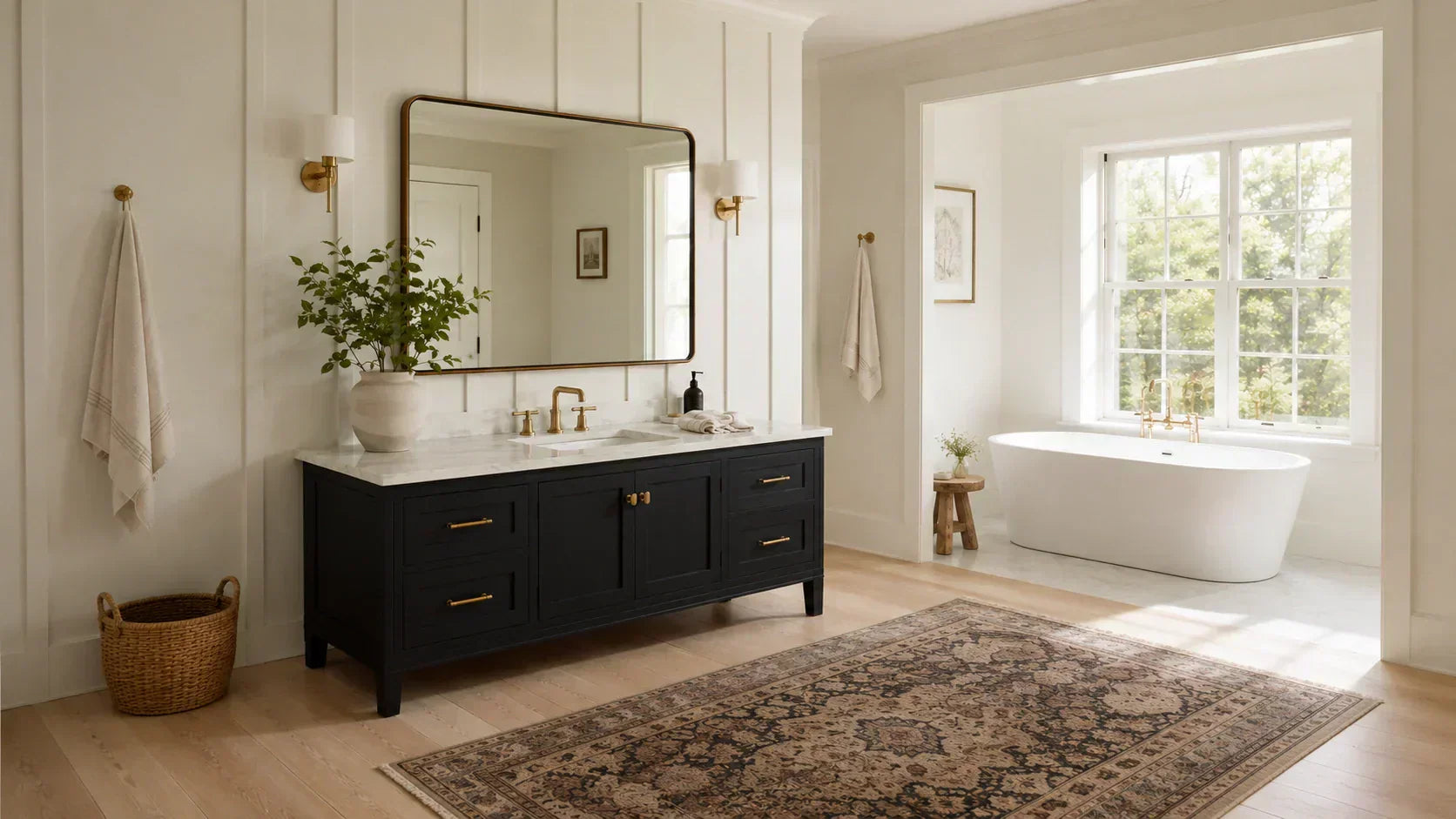
An antique white vanity is the workhorse of the style. A hand-rubbed or lightly glazed finish lets a little grain and edge wear show, which is more forgiving of the small nicks a family bathroom collects. Avoid broad brown streaks painted across every corner. Real-looking age gathers at handles, edges, and raised profiles, not in a uniform pattern.
The Reclaimed Wood Vanity
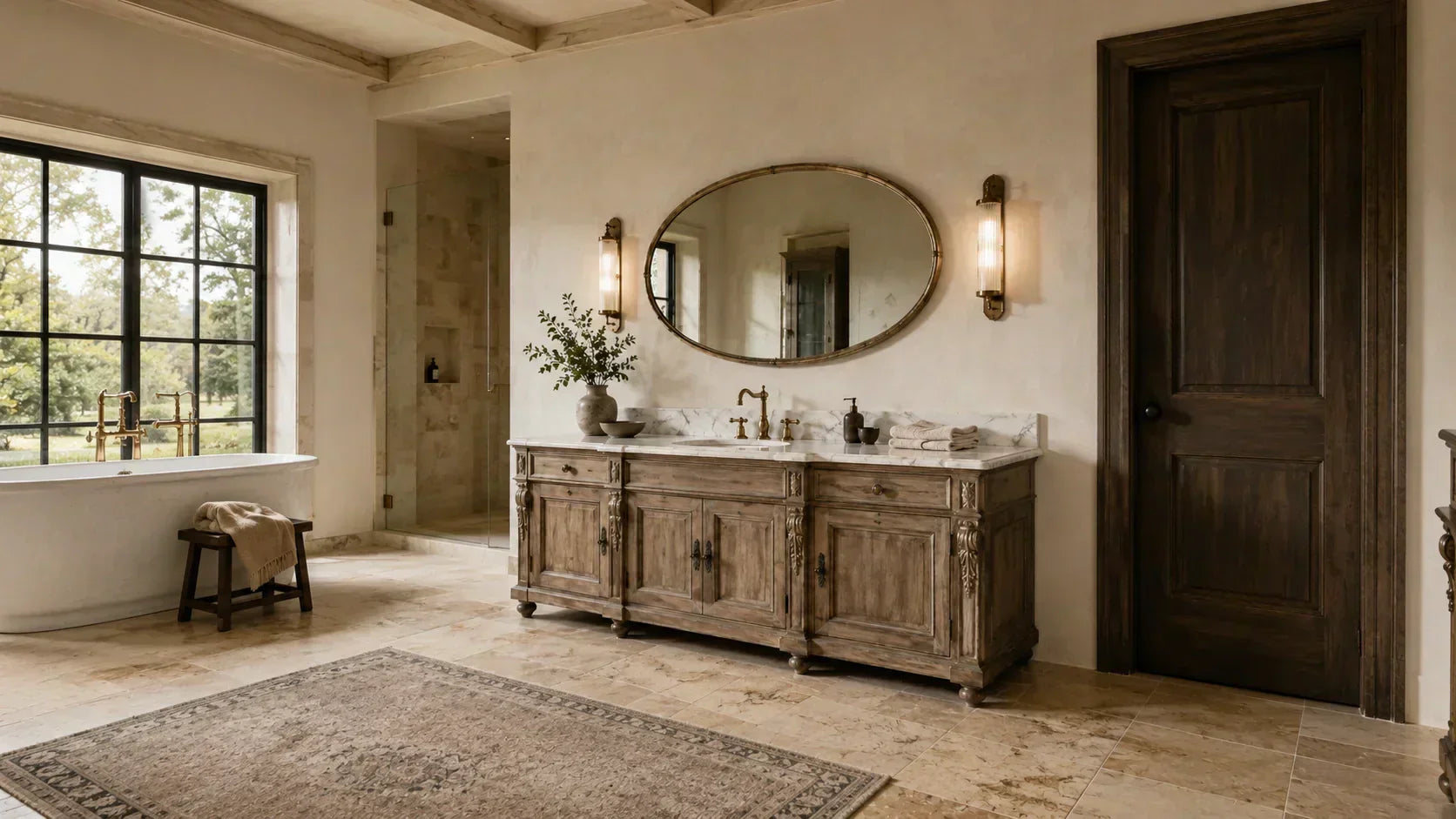
For texture over polish, a reclaimed wood vanity brings saw marks, nail holes, and color variation that new lumber can't copy. The right call is a quiet stone or concrete-look top with matte black or aged bronze fixtures, because heavily figured wood already supplies the pattern. Check that the top, cut edges, and sink openings are fully sealed, since reclaimed texture can hold water where a smooth lacquered surface would shed it.
Explore our Antique Bathroom Vanity


The Antique Dresser Vanity: The Look, Without the Project

The most personal look is a chest of drawers used as a sink base. An antique dresser vanity has furniture proportions, exposed legs, and drawer fronts that a boxy stock cabinet never quite matches. It's the piece that makes a powder room feel collected over time rather than ordered in a weekend.
A flea-market conversion asks more of the cabinet than most people expect. The chest must be solid and stable enough to carry the top, sink, and water weight. The top drawer usually becomes a fixed false front, while the drawer below is notched around the P-trap. Every cut edge then needs sealing, including the places you can't see once the sink is installed.
The Antique Dresser With Vessel Sink, and Why DIY Gets Fiddly
A vessel sink reduces the cutting because it sits above the top, but it also raises the finished rim and takes away usable counter space. Measure the dresser from the floor to its top, add the full vessel height, and mock up that number on the wall before you buy. A sink that looks delicate in a photo can feel awkwardly high once you're leaning over it every morning.
Most dressers stand about 30 to 34 inches tall, and many vessel bowls add another 5 to 6 inches at the rim. That combination can leave you washing your hands near your ribs. The smart move is to solve the finished height before you fall in love with the chest.
A dresser-style vanity gives you the furniture silhouette without the saw work. You keep the legs and drawer-front character, but gain a water-ready top, a fitted sink, and plumbing space planned into the cabinet. For a working bathroom, that's usually the better buy.
Real Antique or Antique Style? The Trade-Off Worth Facing

Pretty photos rarely show what water does to old furniture. A bathroom is the hardest room in the house on wood, and a true antique was usually built for a dry bedroom or dining room, not a humid bath with a sink in it.
What a genuine antique asks of you
Old joints can loosen as humidity changes, and an existing shellac or wax finish may spot or lift around standing water. Sizes are non-standard, sink cutouts can compromise the top drawers, and the back may not align with your rough-in. It's rewarding, but it is a project, not a purchase.
An antique-style vanity earns its keep by solving those hidden problems before installation. We recommend looking for a sealed finish, planned plumbing cutouts, a stable cabinet box, and a top made for daily splashes, then judging the visible character: carved aprons, turned legs, aged brass, real stone, and a finish with believable variation. You get the romance of an heirloom without asking a century-old chest to behave like bathroom cabinetry.
How to Spot a Quality Antique-Style Vanity

A convincing antique-style vanity has to work at arm's length, not only in a product photo. The finish should show depth at edges and profiles, the hardware should feel substantial in your hand, and the drawers should stay aligned after daily use in a humid room.
Construction comes first. Look for solid hardwood on doors, drawer fronts, legs, and carved details, paired with a furniture-grade plywood box. Dovetail joints and soft-close undermount slides matter because wide vanity drawers get heavy once they're filled with bottles, styling tools, and folded towels. Unsealed composite material near a sink cutout is a red flag.
Then inspect the finish and top. A factory-sealed surface should feel even at corners, door edges, and around the sink opening, where water tends to linger. Honed marble gives you the most convincing period look but will develop patina; quartz is the easier choice if you want less maintenance. The version worth spending more on is the one with real stone and solid-metal hardware, not decorative weight added to a weak cabinet.
What good looks like
- Solid hardwood doors, drawer fronts, legs, and carved details
- A furniture-grade plywood cabinet box
- Dovetail joints with soft-close drawer slides
- A sealed finish at corners, sink cutouts, and door edges
- A genuine marble or quartz top
- Substantial solid-metal period hardware
- Raised feet or legs that make floor cleanup easier
Those details separate a vanity that merely photographs as antique from one that still feels like furniture after years of wet hands, steam, and crowded drawers.
Antique Vanity Styles at a Glance

Choose the silhouette first, then the sink and finish. That order keeps a farmhouse cabinet from wearing a formal Victorian basin, or a carved vanity from being overwhelmed by a large vessel bowl.
| Style | Signature Details | Feels Best In | Smart Sink Choice |
|---|---|---|---|
| Victorian | Carved dark wood, marble top, cabriole legs, ornate brass | Formal or period baths, clawfoot tubs | Undermount or integral marble basin |
| Farmhouse | Distressed or antique-white paint, simple lines, bin or glass pulls | Cottage and transitional baths | Drop-in or undermount |
| Dresser style | Furniture silhouette, exposed legs, drawer fronts | Powder rooms and guest baths | Vessel or drop-in, after checking finished height |
| Antique style, newly built | Period details, sealed finish, planned plumbing space | Any working bathroom | The factory-configured sink |
The Details That Sell the Look: Hardware, Finish, and Sink

Antique style lives or dies on the small parts. Hardware, finish, and sink shape do more than extra carving ever will.
Start with hardware. Faceted glass knobs, aged-brass bin pulls, cup pulls, or swing bail handles on a backplate can make a plain cabinet read decades older. Avoid bright chrome pulls on a heavily distressed cabinet unless the contrast is deliberate. The cheapest useful upgrade is often replacing generic hardware with something that has real weight and a finish repeated at the faucet or sconces.
Then match the sink to the silhouette. A vessel works on a repurposed or rustic piece, but it steals counter space and raises the rim. A drop-in suits farmhouse, while an undermount or integral marble basin keeps a formal Victorian vanity composed. We recommend choosing the sink before the faucet, because basin height and hole placement decide whether a widespread, single-hole, or wall-mounted faucet will actually clear the bowl.
Pairing an Antique Vanity With a Modern Bathroom

You don't need a period house to use one of these. An antique or antique-style vanity is often strongest as the one warm, storied piece in an otherwise clean room, while a modern bathroom vanity does the opposite with quiet lines. The trick is contrast with restraint.
Let the vanity lead, then keep the tile, mirror, and lighting simple. Repeat one metal on the faucet and sconces, or echo the vanity's wood tone in a stool or shelf. Avoid matching every old detail. A room with a carved vanity, ornate mirror, patterned tile, clawfoot tub, and vintage sconces can feel staged rather than collected.
Not sure a finish or scale will work in your bathroom?
Antique finishes and carved profiles are hard to judge on a screen. For James Martin pieces, order a finish or stone sample and hold it against your tile and paint in your own light. Send us your rough-in measurements too, and we'll check clearances and sink fit before anything ships.
Once the style feels right, compare the broader range of bathroom vanity styles to make sure antique is the contrast your room needs, not simply the first look that caught your eye.
Frequently Asked Questions

Todd Harmon
The antique pieces that work in a bathroom respect water first, which is why Todd looks as closely at joinery, finish, and sink planning as he does at carving. With over two decades in e-commerce and product curation, Todd built BathGems on a simple idea: a bathroom should feel as collected and considered as the rest of the home. He sources every vanity and fixture in the BathGems catalog the way a designer pulls samples, weighing material, proportion, finish quality, and how a piece actually lives in a real room over time.