How to Choose a Vintage Bathroom Vanity
A true antique washstand can stop you in your tracks in a shop. Then you get it home, open the back to run a drain line, and find the deep drawers that sold you on it sit exactly where the plumbing has to go. That gap between how a vintage piece looks and how it actually lives is the whole reason learning how to choose a vintage bathroom vanity matters before you fall for one specific piece.
The BathGems Brief
Buy the old-world look, not the plumbing problem. A real antique makes sense when you love the restoration process and can accept reduced storage. For a high-use bath, an antique-style vanity is usually the smarter move because the sink, drain, drawers, finish, and standing height were planned together.
- Measure finished height, depth, door swing, and drain position before judging the finish.
- Choose an undermount sink when counter space matters. A vessel sink raises the working height and uses more of the top.
- Judge warm woods in your bathroom's actual light. Cool bulbs can flatten honey oak and muddy saddle brown.
- Open every drawer diagram. The useful center storage is often the first thing plumbing takes away.
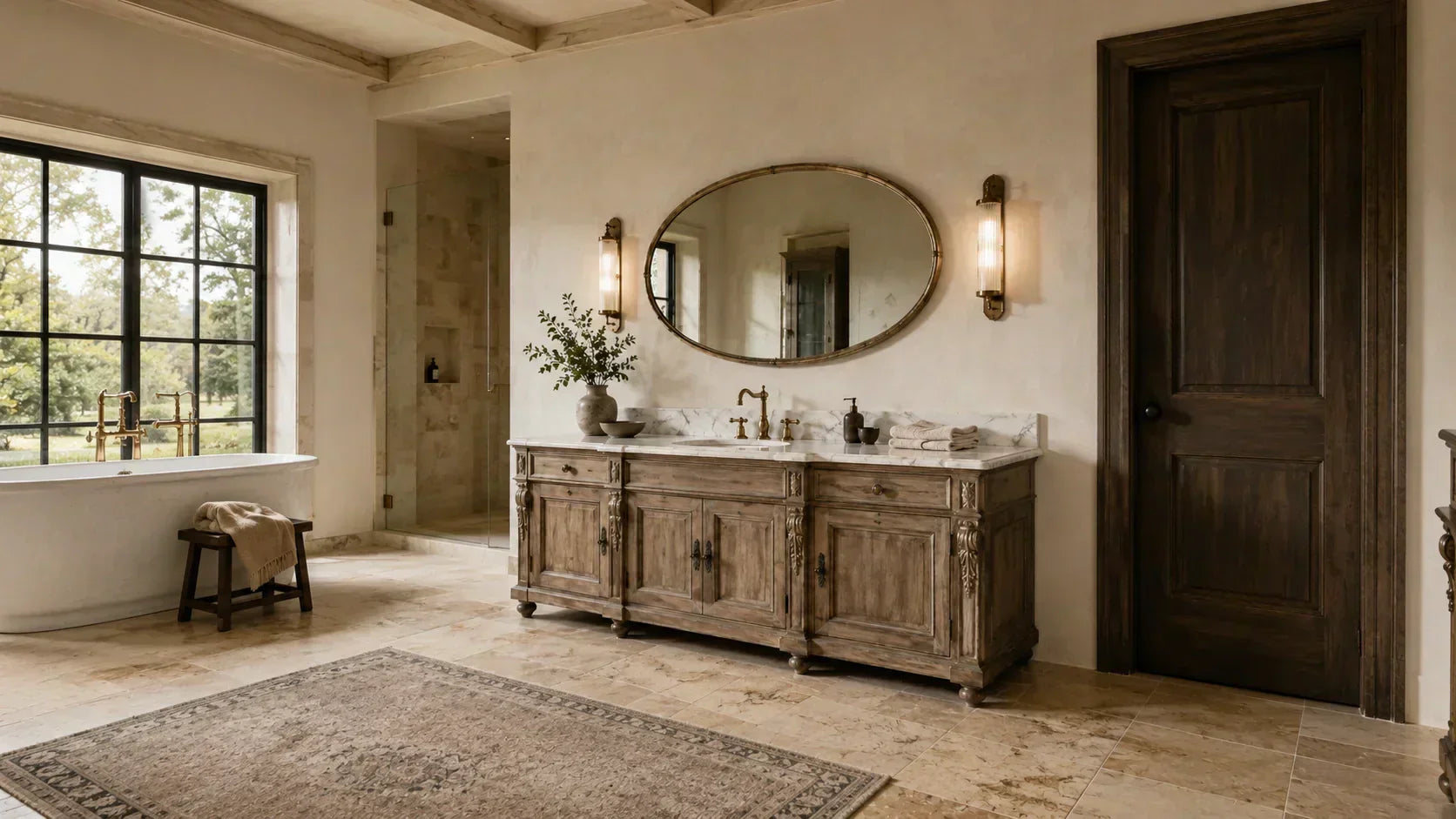
The good news is you don't have to choose between character and function. An antique-style vanity gives you carved detail, warm wood, and a furniture stance, but it's built around modern plumbing and a sealed, bathroom-ready surface. You get the feeling of a found piece without turning the purchase into a woodworking project.
Start With the Honest Fork: Real Antique or Antique Style

Powered by AURA Modern Home Hotspot Builder
A genuine antique brings age, irregular grain, and a patina a new finish can't reproduce. It was also designed as furniture, not as a wet-zone cabinet with a sink bowl, drain, supply lines, and stone sitting on top.
The conversion route can be rewarding, but the smart move is to price the whole job before buying the dresser. You may need a fabricator for the top, a plumber for the rough-in and trap, a carpenter or experienced refinisher to brace the case, and a water-resistant finish on every exposed edge created by the work. The inexpensive marketplace find stops being inexpensive once those steps land on separate invoices.
An antique-style vanity is the more predictable choice for a primary or guest bath. The cabinet is built at a usable height, the back and drawer layout anticipate plumbing, and the finish is applied for bathroom use. Our deeper comparison of an antique versus antique-style bathroom vanity is worth reading before you commit to a restoration project.
What Converting a Real Antique Actually Requires

Powered by AURA Modern Home Hotspot Builder
The conversion isn't difficult because any one step is unusual. It's difficult because the steps depend on one another. The sink determines the top cutout, the top affects finished height, the drain controls the drawer notches, and the drawer work can't be finalized until the plumbing path is known.
| Decision | What to Confirm | The Bathroom Reality |
|---|---|---|
| Finished height | Add the cabinet, countertop, and sink profile before deciding. | A low dresser can feel charming in a shop and uncomfortable every morning. |
| Case strength | Plan back-panel openings, bracing, anchoring, and support for the top. | Cutting a large opening can remove the structure that kept the furniture square. |
| Countertop | Template the sink, faucet holes, overhang, backsplash, and wall conditions. | Old walls are rarely perfectly square, so templating matters more than a paper measurement. |
| Moisture protection | Seal the top edge, cutouts, drawer notches, back openings, and feet. | The raw edge you can't see is often where swelling starts. |
| Drawer layout | Map the bowl, drain, trap, shutoffs, and supply lines before rebuilding boxes. | The deep center drawer you wanted is usually the one the plumbing occupies. |
| Plumbing access | Keep shutoffs and connections reachable after the drawers are installed. | A pretty drawer configuration isn't useful if a plumber must dismantle it to stop a leak. |
Most buyers underestimate the sequence. They cut drawers around an imagined trap location, then discover the wall drain sits an inch off center or the sink bowl drops lower than expected. Avoid the mistake of rebuilding storage before the sink, top, and plumbing path are fixed.
A vessel sink can rescue a dresser that's too low, but it creates a different problem. The bowl adds to the working height and takes a generous bite out of usable counter space. In a powder room that trade can be worth it. In a primary bath, we usually recommend an undermount sink and a cabinet already built at a comfortable height.
Vintage Vanity Finishes Set the Era

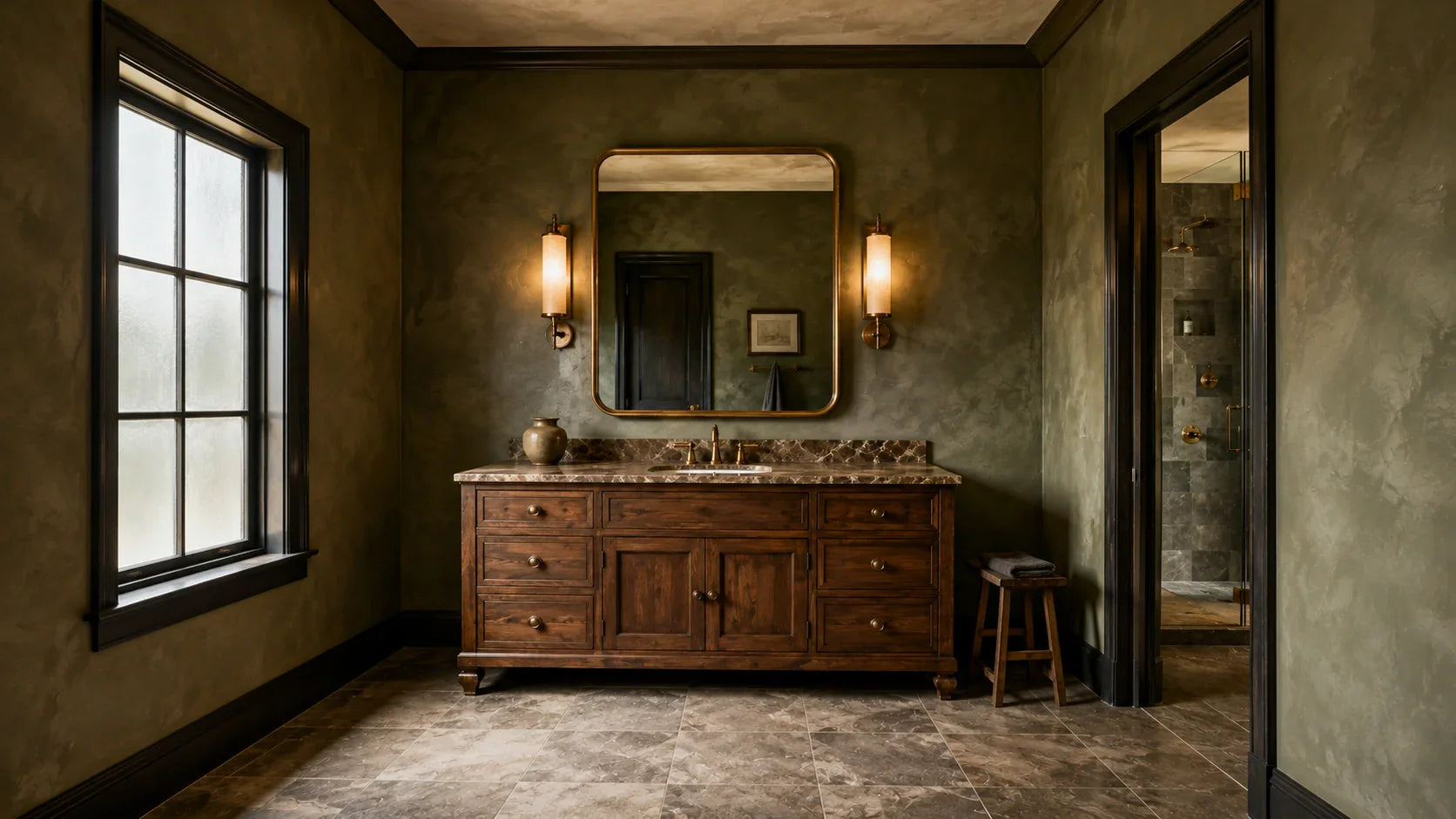
Finish does more era-setting than one carved panel. Honey oak and pecan feel lighter and more cottage-minded, especially with cream tile and aged brass. Saddle brown reads traditional and substantial. Black onyx is the formal end of the range, strongest against pale stone and metal with a little warmth.
The room's light gets the final vote. Honey oak that glows in late-afternoon sun can look muted in a north-facing powder room, while saddle brown under a cool bulb can drift gray. We recommend testing wood and stone together under daytime and nighttime lighting before ordering the full vanity.
Sheen matters too. A very flat dark finish hides reflection but shows pale dust along ledges and molding. A softly reflective finish returns more light and makes carved detail easier to read, though fingerprints may show sooner around pulls. In a windowless bath, the second option is often the better balance.
Size the Vanity to the Room, Then Check the Door

Scale is where vintage-style vanities get misread. A carved cabinet carries more visual weight than a plain slab-front vanity at the same width, so the tape measure only tells half the story.
For many powder rooms, 30 to 36 inches is a practical starting range. A 48-inch single gives a guest or primary bath more counter and wider drawers, and our single sink bathroom vanity collection shows how that footprint behaves across different cabinet styles. A 60- to 72-inch double belongs in a shared bath where two sinks won't choke the remaining storage. Compare common widths through our bathroom vanity sizes hub before narrowing the style.
The smart move is to tape the full width and depth on the floor, then open the bathroom door, shower door, and nearest drawer path. Depth causes more daily irritation than most buyers expect. A cabinet that projects a few inches farther into the room can make the toilet approach or doorway feel tight even when the wall width looks generous.
| Room | Useful Starting Range | Configuration | Check Before Ordering |
|---|---|---|---|
| Powder room | 30 to 36 inches | Single sink | Entry-door swing, depth, faucet reach, and knee room at the toilet |
| Guest bath | 36 to 48 inches | Single sink | Finished height, drawer clearance, and where towels will live |
| Primary bath | 48 to 72 inches | Wide single or double | Sink spacing, plumbing centers, storage lost to two bowls, and side-wall breathing room |
Choose the Top and Sink as One Working Surface
The countertop is where vintage character meets toothpaste, standing water, and daily cleaning. Marble gives the most convincing period look, but it can etch and stain if you expect it to behave like quartz. A marble-look quartz keeps the pale veining and asks less of a busy household.
An undermount sink is our default recommendation because it preserves more open counter and lets you wipe water straight into the basin. A vessel sink makes a stronger decorative statement, but the bowl occupies the surface and can push the rim too high if the cabinet wasn't sized for it. Most buyers see the vessel silhouette and forget to calculate the combined height.
A factory-paired vanity and top removes several fit questions at once. The overhang, sink cutout, faucet drilling, and cabinet support have already been coordinated. A bathroom vanity with top is the smart route when you want the project to move without a separate templating visit.
Use Hardware to Keep the Look Old, Not Themed
Aged brass, unlacquered brass, and satin gold all warm vintage cabinetry, but they don't read the same. Unlacquered brass changes as it ages, while satin finishes stay more consistent. Pick the behavior you want before you try to match the faucet, pulls, and sconces.
Polished chrome can work beautifully on a darker traditional cabinet because the reflection keeps the room crisp. Brushed nickel is quieter and easier in a family bath. Avoid forcing every accessory into the same finish, but keep the permanent fixtures in one clear metal family so the room feels deliberate.
Vintage-Style Vanities Worth Comparing

Once the room, plumbing, and sink type are settled, compare pieces by storage layout rather than ornament alone. The carved front may win the first glance, but the drawer map decides how the vanity lives on a weekday morning.
Explore our Antique Bathroom Vanity


The 48-inch Brookfield Single in Honey Oak by James Martin is the warm, traditional option. Raised-panel doors, detailed corner molding, Champagne Brass hardware, cabinets, and mixed drawer depths give it the presence of furniture without sacrificing the storage plan.
The 48-inch Brittany Single in Saddle Brown has a deeper, more tailored read. Its door-and-drawer layout is useful for buyers who want furniture styling but still need a place for tall bottles, daily tools, and smaller grooming items.
For a larger primary bath, the 72-inch Brookfield Double in Black Onyx brings the same picture-frame doors and traditional molding across two sinks. Black gives the carved detail a cleaner edge, but it needs pale stone and good mirror lighting so the cabinet doesn't lose definition after dark.
You can compare the full range in our vintage bathroom vanity collection. We recommend opening the specification and storage images for every finalist instead of relying on the styled room shot.
Open the Drawers Before You Fall for the Front

The most expensive storage mistake is also the least visible online. In a converted antique, the center drawer beneath the basin often becomes a fixed front or a shallow U-shaped box because the sink and trap occupy the space behind it.
A purpose-built antique-style vanity can route drawers and cabinet openings around the plumbing from the start. That doesn't mean every drawer is full depth. It means the loss is planned, the slides still work properly, and the remaining compartments are sized for real bathroom storage.
Before buying, confirm the cabinet material, drawer construction, hinge and slide type, top configuration, faucet drilling, sink placement, finished dimensions, and rough-in diagram. Then compare those drawings with your shutoffs and drain. The right call is the vanity that fits the wall without asking the installer to erase the storage you paid for.
Check the finish in the room, not on the screen
Order the wood and stone samples that match your shortlist, then hold them beside the tile and paint in morning light and after dark. BathGems currently refunds qualifying James Martin sample purchases with an eligible vanity order, subject to the terms shown on each sample page. The useful test is simple: choose the finish that still looks right under your least flattering bathroom light.
A vintage vanity should feel like it has always belonged in the room, but it still has to clear the door, meet the drain, and hold what you use. Start with fit and storage, then let the carved detail and warm finish do the emotional work.
Frequently Asked Questions

Todd Harmon
Todd sees vintage style as a balance of memory and mechanics. The carved front should catch your eye, but the height, finish, drawer map, and plumbing access are what make the vanity feel right after the novelty wears off. With over two decades in e-commerce and product curation, Todd built BathGems on a simple idea: a bathroom should feel as collected and considered as the rest of the home. He sources every vanity and fixture in the BathGems catalog the way a designer pulls samples, weighing material, proportion, finish quality, and how a piece actually lives in a real room over time.