Antique vs. Vintage Bathroom Vanity: What the Terms Actually Mean
A vanity can look 150 years old and have been built last year. Another can be genuinely decades old and look almost new after refinishing. The antique vs. vintage bathroom vanity question gets confusing because age, styling, originality, and bathroom readiness are four separate issues. Knowing which one a listing actually answers keeps you from paying for history when what you really want is the look.
The BathGem's Blueprint
- Start with the date. The U.S. customs benchmark for an antique is more than 100 years old, while vintage still needs an approximate decade to mean anything useful.
- Ask what changed. Refinishing, replacement hardware, repairs, and a later sink conversion don't reset the manufacturing date, but they do change originality and condition.
- Separate appearance from age. Turned legs, carved wood, aged brass, and distressing can all be new.
- Judge the piece as bathroom furniture. Footprint, finished sink height, drain position, drawer depth, landing space, finish condition, and plumbing access will shape daily use.
The carving tells you the style. The date tells you what it is. The plumbing tells you whether it belongs.
Antique vs. Vintage Bathroom Vanity: The Real Difference

The cleanest distinction starts with age, but listings also use words that describe origin, appearance, and later alterations. Antique and vintage are age claims. Period piece, reproduction, antique-style, repurposed, and refinished answer different questions about when the furniture was made, what it copies, and what happened to it later.
| Term | What it should tell you | What it doesn't prove |
|---|---|---|
| Antique | An age claim. Under U.S. Harmonized Tariff Schedule heading 9706, antiques are more than 100 years old. | Authenticity, value, condition, originality, or bathroom readiness. |
| Vintage | The seller is claiming genuine age from an earlier era. The approximate decade is more useful than the label by itself. | One universal age cutoff, or that the piece is antique. |
| Period piece | The seller is claiming the furniture was made during the historical period being named. | That later repairs, hardware, finishes, or replacement parts are original. |
| Reproduction | A later piece was made to copy or closely interpret an earlier furniture design. | That the piece itself was made during the original period. |
| Antique-style or vintage-style | The design borrows visual cues associated with older furniture. | Any particular manufacturing date. |
| Repurposed | Existing furniture was adapted to a new use, such as turning a dresser into a vanity. | That the original furniture itself is antique or vintage. |
| Refinished or restored | The piece received later surface, repair, or restoration work. | That its manufacturing date changed, or that all original material remains. |
Those categories can overlap. An antique dresser can later become a repurposed vanity, while a cabinet built this year can be antique-style from the day it leaves the factory.
Antique Starts With Age, Not Wear
The antique bathroom vanity meaning starts with when the furniture was made, not how weathered it looks. The U.S. Harmonized Tariff Schedule places antiques under heading 9706 when they're more than 100 years old. That's a useful legal benchmark for age, not authentication of a seller's cabinet.
A carefully refinished old piece may look cleaner than a new vanity with darkened hardware, rubbed edges, and an intentionally distressed finish. Refinishing doesn't rewrite the manufacturing date. It changes the surface, condition, and amount of original material that remains.
If age affects what you're willing to pay, ask for an approximate production date and the evidence behind it before discussing carvings, brass, or patina. If the claimed date sits right on the 100-year line, even the month can matter under a more-than-100-years test.
Vintage Needs a Decade
Vintage is used more loosely than antique, so we wouldn't treat it as a precise age claim without an approximate decade. “Made in the 1960s” gives you information. “Vintage-inspired” tells you about design language.
A newly manufactured cabinet can use tapered feet, aged brass hardware, warm stain, and softened edges convincingly. It may make a very good vintage-style vanity, but none of those choices makes the cabinet old.
We'd rather know the date than hear a romantic description of it.
Carved Wood and Aged Brass Can't Tell You the Date

Shoppers naturally read certain details as evidence of age. Carved wood, a claw-foot base, turned legs, dark stain, aged brass hardware, and a distressed finish can all send the same visual message.
Modern furniture makers can reproduce every one of them. Aged brass can be new. So can every scuff in a distressed finish.
Patina develops through age, handling, oxidation, cleaning, repairs, sunlight, and use, but it isn't a timestamp. Refinishing can remove old surface evidence, while applied distressing can add convincing wear to a new cabinet.
Hardware creates the same trap. An old cabinet may wear newer pulls, while a new cabinet may use convincing aged brass hardware. The hardware can support the style story, but it can't date the cabinet for you.
The useful rule
Use the decorative details to decide whether you love the piece. Use the date and provenance to decide what you're actually buying.
Period, Reproduction, and Repurposed Describe Different Things

For shopping purposes, treat “period piece” as a claim that the furniture was made during the historical era being named. A period-style or antique-style piece was made later but borrows that era's proportions, ornament, materials, or visual language.
A reproduction isn't proof of original-period age. It's furniture made later to copy an earlier design. A reproduction can eventually become antique by age in its own right, but it still wasn't made during the period it reproduces.
For a bathroom, that can work in your favor. A purpose-built reproduction can give you the visual weight of older furniture without asking you to cut into an original cabinet that was never designed around a sink and drain.
Don't pay for age when what you really love is the look. Our guide to antique vs. antique-style bathroom vanities takes that buying decision one step further.
Repurposing Changes the Use, Not the Cabinet's Birthday
If a dresser made decades ago is converted into a vanity today, the underlying furniture keeps its original age. The sink cutout, countertop, plumbing alterations, and drawer modifications belong to the later conversion.
The same logic applies to replacement hardware and refinishing. Those changes affect originality and condition, not the manufacturing date.
On a signed, rare, or unusually intact piece, have a qualified appraiser or furniture conservator assess it before anyone cuts the top, back, or drawers. Once original casework is removed for plumbing, “we can always put it back” stops being a serious plan.
How to Check an Age Claim Without Playing Appraiser

Start with the evidence a seller can provide, then look at the parts of the cabinet a refinisher didn't stage for the photograph. The front tells you how the piece presents. The back, underside, drawer sides, and hardware mounting points often tell you what changed.
Evidence worth asking for
- An approximate year or decade, plus how the seller reached it
- Maker's labels, stamps, pencil marks, serial numbers, or purchase records
- Clear photographs of the back, underside, drawer construction, and unfinished interior surfaces
- A list of replaced hardware, repairs, refinishing, and earlier alterations
- Provenance or an appraisal when the claimed age materially affects the price
No single dovetail, screw, saw mark, or label gets to date the whole cabinet. Construction methods overlap, parts get replaced, and furniture can contain material from more than one period.
Use those details to support a better conversation with the seller or appraiser, not to turn one clue into certainty.
What an Antique-Style Bathroom Vanity Looks Like Today

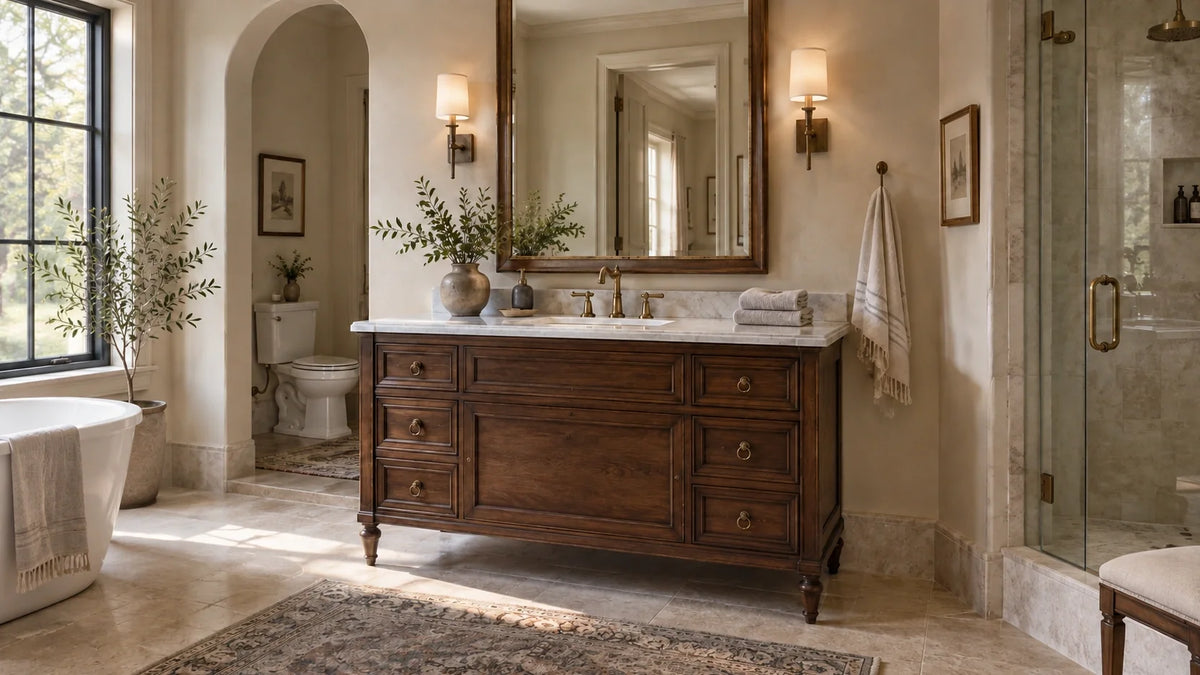
Often, when someone says they want an antique vanity, they're describing how they want the room to feel before they're making a provenance claim. They want visible wood, traditional detailing, furniture-style feet, and a cabinet with more presence than a plain box with doors.
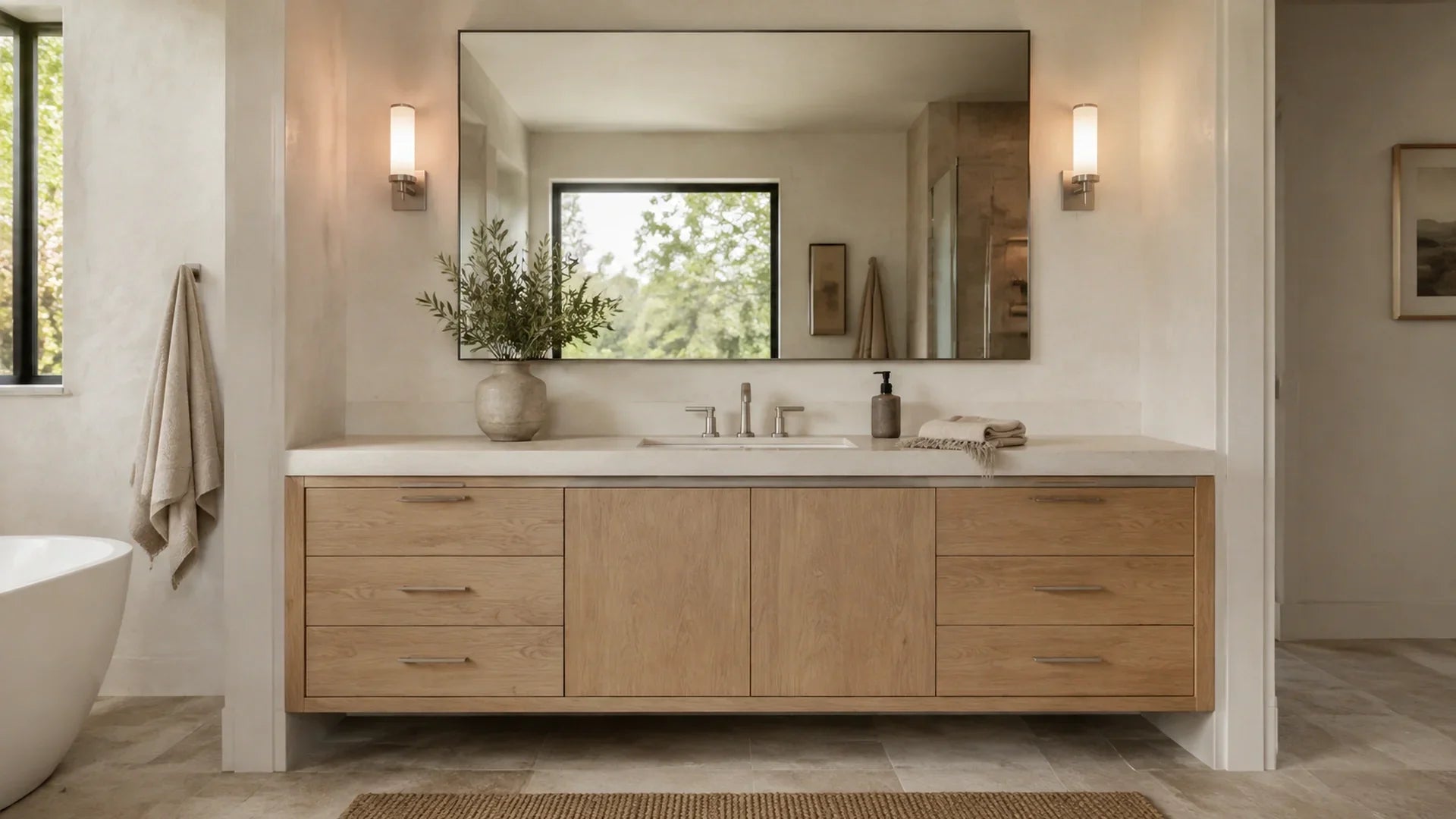
If the look is the part you care about, our antique bathroom vanity collection is a useful place to compare furniture-style cues in pieces intended for bath use. Turned or shaped legs, carved fronts, framed doors, warmer wood finishes, traditional metal hardware, and substantial proportions can all create that older design language.
A newly built antique-style vanity isn't an authenticated antique simply because its design borrows from older furniture. Check the product page for the actual cabinet materials, top, sink configuration, faucet drilling, and plumbing openings rather than assuming every period-inspired piece is specified the same way.
For everyday use, a purpose-built vanity can be the easier decision. The cabinet, storage, top, and plumbing path can be planned together instead of treated as alterations after you fall in love with the furniture.
Explore our Antique Bathroom Vanity


Sometimes the shopper who starts by asking for an antique discovers that what they actually wanted was dark wood, carved detail, brass, and a vanity that stands like a piece of furniture. Once you know that, you can shop the look without pretending it's something else.
Wood and Construction Matter More Once Water Enters the Room

Age matters to terminology. Construction starts mattering the moment you turn on the faucet.
Solid wood can be a strong cabinet material, but it isn't an authenticity test and it doesn't ignore bathroom conditions. The USDA Forest Service Wood Handbook explains that wood exchanges moisture with the surrounding air, so humidity, temperature, finish condition, joinery, and the way the cabinet was built all matter once the piece lives in a bathroom.
Neither solid wood nor veneer dates a cabinet by itself. Older and newer furniture can use either, sometimes in the same piece.
Look closely at the surfaces that will live nearest the basin. Loose veneer edges, opened joints, lifting finish, damaged drawer boxes, and rough earlier sink cutouts tell you more about bathroom readiness than a charming worn corner on the front.
A solid wood bathroom vanity can be the smarter call when you want real wood construction without inheriting uncertain repairs or earlier plumbing modifications. We'd choose documented materials, sound joinery, and a stable cabinet over an older piece whose age makes you excuse problems you'll notice every morning.
The room matters too. If moisture lingers after showers, the finish and joints have a harder job regardless of the furniture's age, so ventilation belongs in the vanity decision rather than on a later punch list.
Explore our Solid Wood Bathroom Vanities

30" Beckett Single Bathroom Vanity in Whitewashed Oak with Brushed Nickel Trim by Wyndham


24" Chianti Single Cabinet in Glossy White in Champagne Brass by James Martin Vanities


A Repurposed Dresser Has a Plumbing Problem Before It Has a Style Problem

A repurposed dresser vanity can be the piece everyone notices first. The plumbing still gets the final vote.
The drain and trap often need the same center-back area occupied by the upper drawers. Those drawers may need to be shortened, notched, rebuilt, or sacrificed, so map the drain path before falling for the cabinet front.
An old dresser can survive a century and still lose the argument with a P-trap.
Sink choice changes the proportions too. A vessel basin sits above the counter and may preserve more cabinet interior, but its bowl adds to the finished working height. An undermount sink keeps the rim visually quiet while occupying space below the top and potentially reducing usable drawer depth.
The better measurement is the finished setup, not the empty dresser. Add the cabinet, countertop, and basin, then mock up that height on the wall. Tape the cabinet's width and depth on the floor, open the bathroom door, extend the deepest drawer, and make sure the piece can actually travel through the doorway, hall turn, or stair landing that leads to the room.
Most buyers notice the sink. We recommend looking just as hard at what's left beside it and underneath it.
Protect the space beside the sink
A dramatic basin can consume the landing space you expected to use for soap, a toothbrush, contact lenses, or a styling tool. We'd protect useful counter space before choosing the most sculptural bowl.
How to Use the Terms When You're Actually Shopping

You don't need to become an antiques appraiser. You need to ask the questions in the right order.
Start with age
- When was the cabinet made?
- Is that date documented, attributed, or estimated?
- Is it original to the period, a reproduction, or simply period-inspired?
Then ask what changed
- Has it been refinished or structurally repaired?
- Is the hardware original or replaced?
- Has the top already been modified?
- Were drawers cut, shortened, or rebuilt for plumbing?
Finally, judge it as a vanity
- Does its width and depth work with the open door and circulation?
- What will the finished sink height be?
- Where will the drain, trap, supply lines, and shutoffs land relative to the drawers?
- How much usable drawer and counter space remains after the sink and plumbing are in?
- Is the finish sound around water-prone areas, and does the room dry out after showers?
If a seller spends five minutes describing the distressed finish but can't tell you roughly when the cabinet was built, you still don't know whether it's antique.
And if the age checks out but the plumbing destroys the storage, history hasn't solved your bathroom problem.
Choose the Look First, Then Decide How Much History You Want

Once age, style, originality, and bathroom function stop getting lumped together, the choice becomes easier.
If genuine historical origin matters to you, investigate the production date, alterations, repairs, and provenance before anyone modifies the furniture. An older original can be worth the extra effort when owning that history is part of the appeal.
If what you really want is carved wood, traditional hardware, furniture-style legs, warmer finishes, or a cabinet that gives the room some age without actually being old, a newer piece may be the smarter bathroom decision.
Compare other bathroom vanity styles before deciding antique is the category you need. Then tape the cabinet footprint on the floor and open every nearby door and drawer. The right amount of history is the amount your bathroom can live with.
Frequently Asked Questions

Todd Harmon
Age can tell you what a vanity is, but the sink height, drain path, finish, and proportion decide whether it belongs in your bathroom. The useful distinction is the one that changes what you buy and what you have to alter. With over two decades in e-commerce and product curation, Todd built BathGems on a simple idea: a bathroom should feel as collected and considered as the rest of the home. He sources every vanity and fixture in the BathGems catalog the way a designer pulls samples, weighing material, proportion, finish quality, and how a piece actually lives in a real room over time.