What Is a Floating Vanity and Is It Right for Your Bathroom?
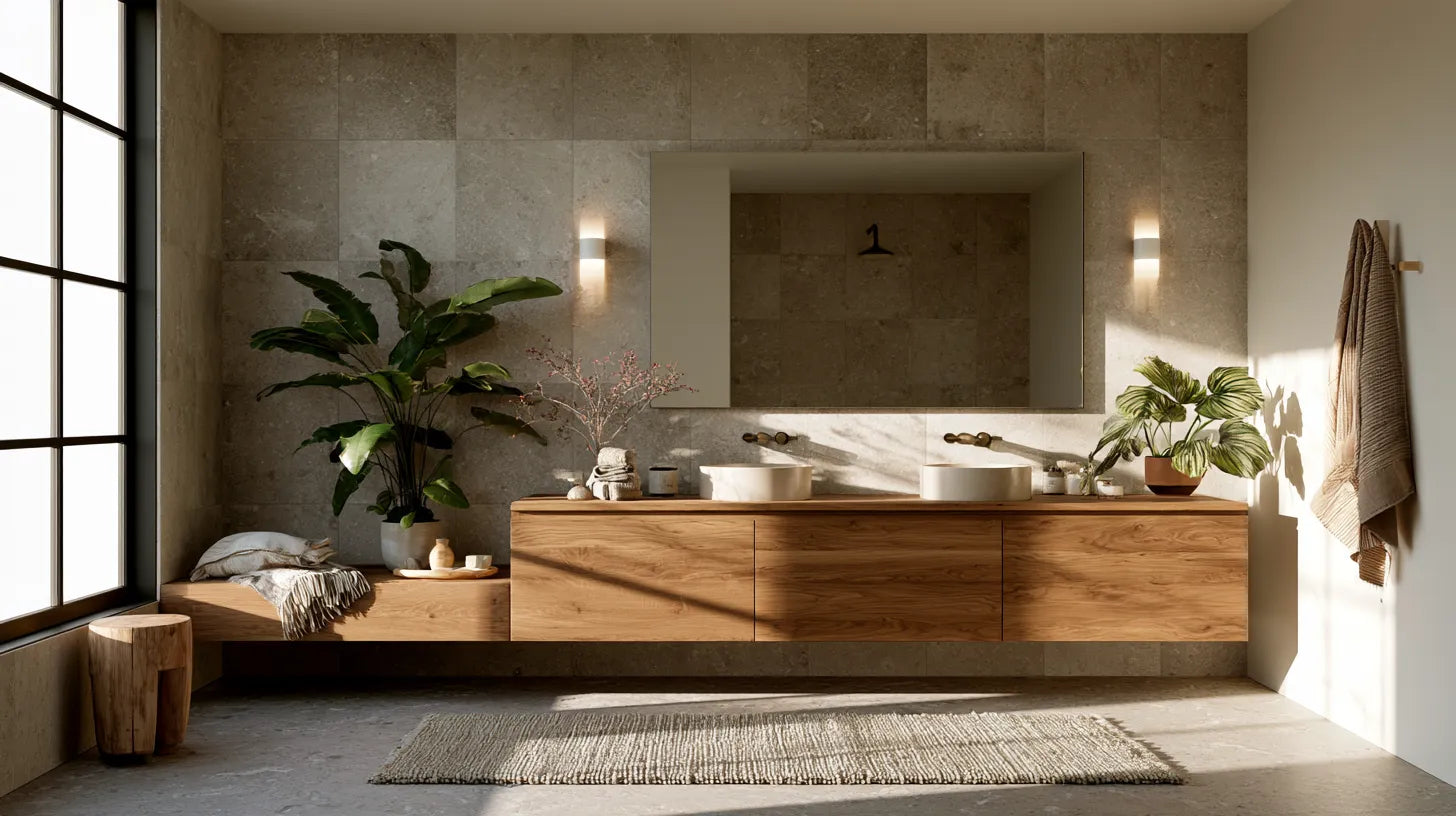
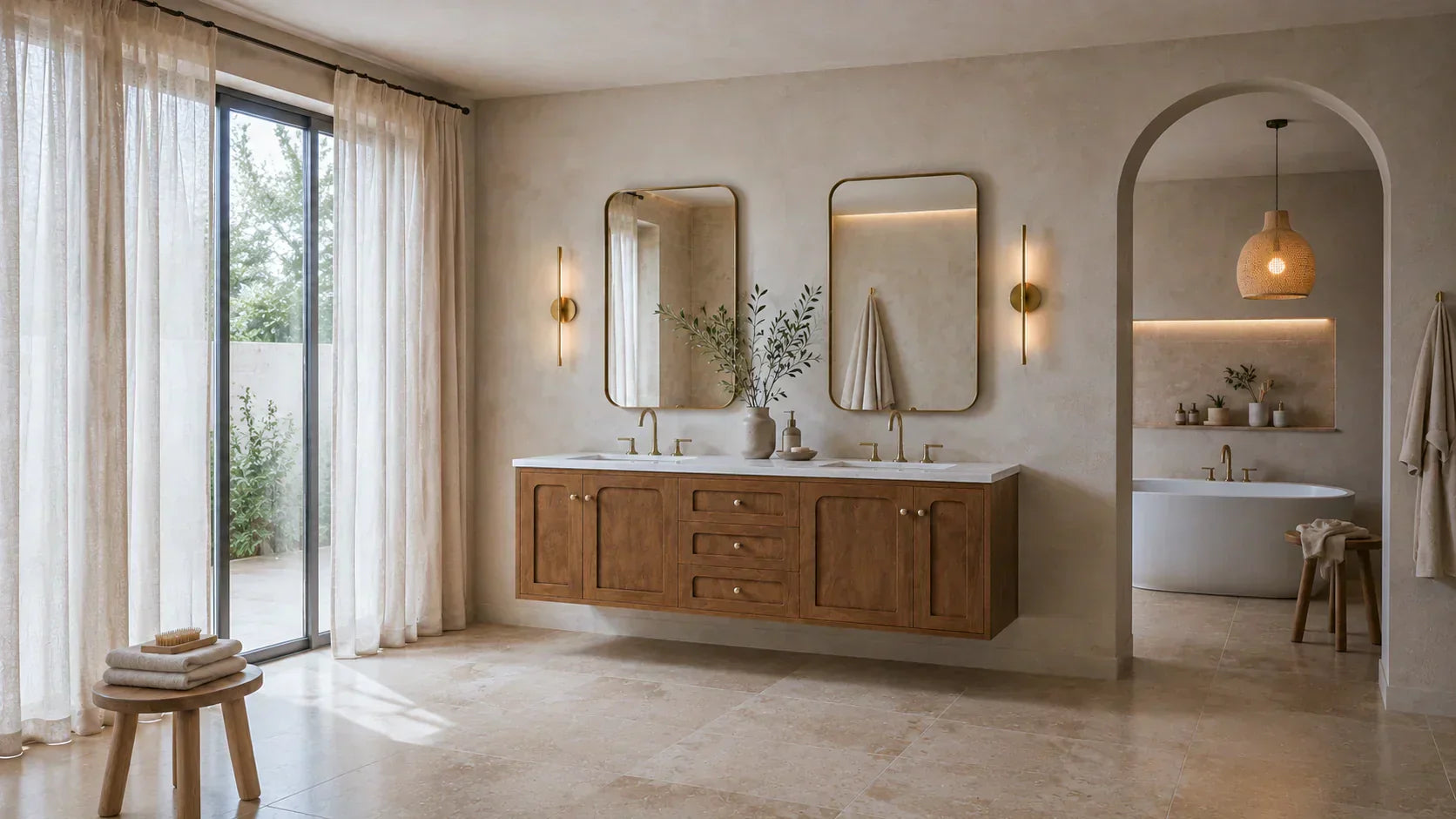
A floating vanity is the one change that can make a small bathroom breathe. The cabinet mounts to the wall, the floor runs underneath it, and the room suddenly reads bigger than it measures.
The BathGems Brief
A floating vanity buys you visual space, easier floor cleaning, and a counter height you can set to the room. It also asks for real wall support, wall-routed plumbing, and an honest look at how much closed storage you use every day.
- Best for small bathrooms, powder rooms, and modern baths where visible floor makes the room feel lighter.
- Plan 2x6 or 2x8 blocking between the studs before the wall closes. Drywall anchors aren't a shortcut.
- Most counters land around 34 to 36 inches high, but a wall mounted vanity lets you tune the height to your body and your room.
- Check the drawer layout before you fall for the front view. Wall plumbing can steal the exact space you wanted for hair tools and spare hand towels.
The appeal is easy to see. The decision lives behind your wall, below your sink, and in the way you use the room every morning.
What is a floating vanity?

Powered by AURA Modern Home Hotspot Builder
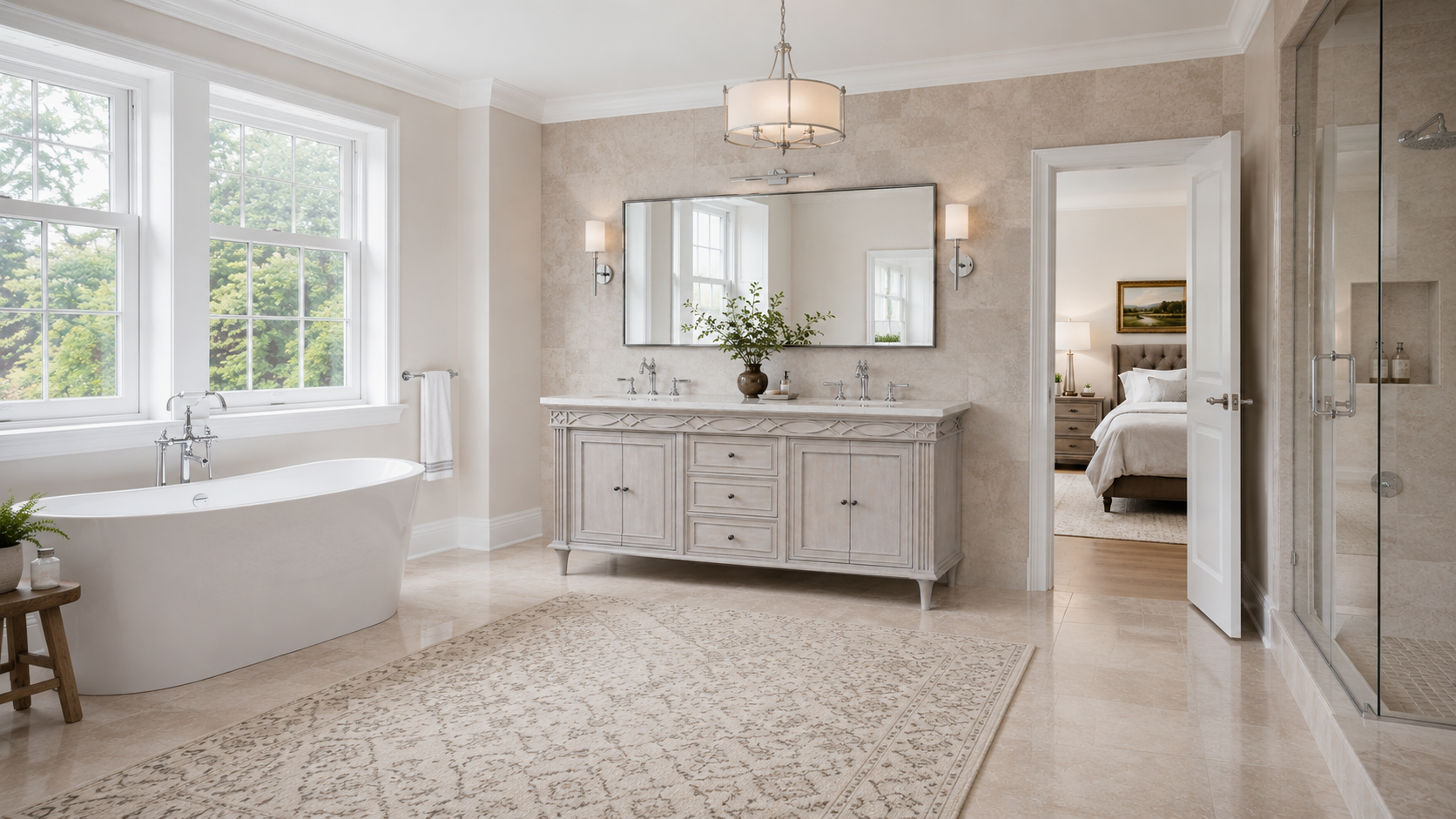
A floating vanity, also called a wall mounted or wall hung vanity, is a bathroom cabinet that attaches to the wall with open space beneath it instead of sitting on legs or a full base. A freestanding vanity does the opposite. It stands on the floor, hides the plumbing behind a solid base, and gives the room more visual weight.
The difference sounds small. In the room, it's the whole personality of the wall. A freestanding piece grounds the space. A wall hung cabinet lifts it.
We recommend thinking of it less as a trend and more as a layout move. If the floor is the thing making your bathroom feel tight, floating helps. If storage is already strained, freestanding may be the calmer answer.
Why the look wins people over

Powered by AURA Modern Home Hotspot Builder
Stand in the doorway of a compact bathroom and the floor is the first thing your eye reads. When that floor continues under the cabinet, the room feels larger than the tape measure says. It's the same visual trick a console table on slim legs plays in an entry, and it works because your eye gets more floor before it hits furniture.
The daily payoff is just as practical. Cleaning underneath is one quick pass with a mop or vacuum, with none of the grime line that collects where a base cabinet meets tile.
The height control is the sleeper benefit. Standard vanities land where they land. A wall mounted cabinet lets you set the counter where it feels right, usually around 34 to 36 inches off the finished floor. For a wheelchair-accessible lavatory, the U.S. Access Board's ADA guidance caps the rim or counter surface at 34 inches above the floor.
The style reads cleanest with a modern bathroom vanity in white oak, matte white, walnut, or a soft neutral finish. The smart move is to keep the cabinet face quiet and let the shadow line underneath do the work.
Explore our Floating Bathroom Vanities

72" Double Sink Bathroom Vanity with Top in Chestnut - James Martin Marcello


24" Chianti Single Cabinet in Glossy White in Champagne Brass by James Martin Vanities


What your wall needs before you commit

Showroom photos skip the part that matters most. A floating vanity is only as solid as what's behind the drywall.
The cabinet's weight, plus the countertop, sink, faucet, and everything you load into it, has to land on structure. We recommend solid blocking, usually a 2x6 or 2x8 run horizontally between studs, so the mounting hardware has wood to bite into across the span. Skip it and rely on drywall anchors, and you're trusting your sink to a few plastic plugs.
A wall mounted vanity has to anchor into solid blocking between the studs, not drywall alone.
The Wall Test
Before you commit, run the wall through three checks:
- Is there solid 2x6 or 2x8 blocking between the studs, or can a contractor add it before installation?
- Can the drain and supplies be routed through the wall without cutting into your best drawer space?
- Is the floor reasonably level, so the open gap underneath reads clean instead of wedge-shaped?
Three yes answers and you're clear to float. A no on the first one is the dealbreaker.
Timing matters. Adding blocking is straightforward while the wall is open during a remodel and a bigger project after tile or drywall is finished. If your bathroom is already closed up, ask the installer to verify the structure before you order, not the morning the vanity arrives.
| Vanity Width | What to Confirm | Counter Height | Plumbing Note |
|---|---|---|---|
| 24 to 36 inches | Blocking still matters. A lighter cabinet isn't permission to use drywall anchors. | Usually 34 to 36 inches | Keep the trap tight to the wall so the single drawer or shelf stays useful. |
| 48 to 60 inches | Confirm the mounting rail or bracket pattern lines up with your framing plan. | Usually 34 to 36 inches | Plan around drawer cutouts before the plumber sets the drain height. |
| 72 inches and up | Treat it like a furniture-scale installation. Use continuous blocking and a pro install. | Usually 34 to 36 inches | Double sinks need twice the plumbing coordination, not just more width. |
Use the table as a planning screen, then confirm the final details against the vanity's spec sheet and your installer. The right call is to make the wall boringly overbuilt. You'll never regret hidden support.
The trade-offs that matter after install

A wall hung cabinet is a real commitment to a look, and a few honest downsides come with it.
The first is storage. Because the cabinet stops short of the floor, you usually get less closed storage than a comparable freestanding piece of the same width. For a powder room or a streamlined primary bath, that's a fair trade. For a busy family bathroom that swallows towels, cleaning supplies, and three people's worth of clutter, it can pinch.
The hidden storage cost is plumbing. The drain usually routes into the wall instead of down through the floor, so the P-trap and supply lines sit inside the cabinet, often where you'd otherwise want drawer depth. Better designs work around that with U-shaped drawer cutouts or a recessed plumbing corridor. Check the interior, not just the front.
The floor matters too. A floating cabinet creates a crisp horizontal shadow line, and that line quietly announces whether the floor is level. In an older home with a slight slope, the gap underneath can look uneven unless the installer plans for it.
Scale, sink choice, and finish

Because the cabinet puts the floor and proportions on display, scale has to be more deliberate.
- Let the floor stay calm. Continuous flooring or a low-contrast tile layout keeps the open space underneath from feeling busy.
- Keep wide vanities visually slim. At 60 inches and up, a tall, deep box can look like a heavy block hanging off the wall. A lower vertical profile keeps even a 72 inch double vanity feeling lighter.
- Think hard before choosing a vessel sink. It can look sculptural, but it raises the working height and steals counter space right where your toothbrush, soap, and skincare land.
- Use the finish to warm the geometry. White oak, walnut, and soft matte lacquer keep the cabinet from reading too clinical under bright bathroom lighting.
Most buyers get the sink wrong before they get the vanity wrong. If the bathroom is small, we recommend an undermount or integrated sink over a vessel sink. You keep more flat counter, the surface wipes cleaner, and the cabinet can stay visually quieter.
Is a floating vanity right for your bathroom?

Lean floating if your bathroom is compact, your style runs modern or transitional, you want easier floor cleaning, or you'd benefit from setting the counter height yourself. It's especially strong for a small bathroom vanity where every visible inch of floor matters.
Explore our Small Bathroom Vanities

28.50" Single Bathroom Vanity with Sink & Top in Walnut - Ambella Home Reeded

28" Single Sink Floating Bathroom Vanity with Top in Dark Walnut - Ambella Home Cirque

28" Single Floating Bathroom Vanity with Sink & Top in Warm Grey - Ambella Home Cirque

24" Linden Single Vanity in Whitewashed Walnut by James Martin Vanities


Lean freestanding if storage is your first priority, your wall can't easily take blocking, your home wants a more traditional silhouette, or you need the simpler install. Neither one is the better vanity. They're answers to different rooms.
Start with the wall and the way you live, not the photo. Once the support, plumbing, storage, and floor line make sense, the choice gets much clearer.
Not sure how a finish will read under your bathroom's lighting?
Hold the finish against your tile and paint in your own light before you commit. Morning sun, warm sconces, and a windowless bath all change how white oak, walnut, matte black, and polished chrome behave. For the next step, browse our floating bathroom vanities or compare all bathroom vanities by size, style, and layout.
Frequently Asked Questions

Todd Harmon
A floating vanity is proof that empty space can be a design material, but only when the wall, plumbing, and storage plan are doing their jobs. Todd looks at wall mounted vanities as working furniture first, pieces that have to feel right in a real bathroom, not just in a product photo. With over two decades in e-commerce and product curation, Todd built BathGems on a simple idea: a bathroom should feel as collected and considered as the rest of the home. He sources every vanity and fixture in the BathGems catalog the way a designer pulls samples, weighing material, proportion, finish quality, and how a piece actually lives in a real room over time.