
Tips For Remodeling Your Bathroom On A Budget
Deciding to remodel a tired bathroom is exciting right up until you see what a full gut costs. The good news is that most bathrooms do not need one. A clear budget, the right priorities, and a few well-chosen upgrades can change the room completely without moving a single pipe. Here is how I would plan it.
The BathGems Blueprint
The cheapest bathroom remodel keeps the layout, fixes what is broken first, and spends the rest on the three or four things you see and touch every day.
- Keep the plumbing where it is. Moving drains and supply lines is where budgets break.
- Repair before decorating. Ventilation, leaks, and electrical safety come before any cosmetic upgrade.
- Spend on the vanity, light, and faucet. They carry more of the room's look than tile or paint.
- Hold back 10 to 20 percent. Hidden damage appears once the walls are open, so keep a reserve.

Setting Your Bathroom Remodel Budget
Start with what you can actually spend, then plan around it. Moving plumbing fixtures can raise costs quickly, which is why keeping the layout is the biggest saver. There are many ways to upgrade a bathroom's look and function without that expense. Our bathroom remodel cost statistics show what homeowners typically spend, so you can see where your plan sits.
Calculate What You Can Spend Upfront
Review your savings, income, and any financing honestly. A common rule of thumb is to keep bathroom spending to a modest share of your home's value, and most budget refreshes cost far less than that ceiling. If money is tight, do a smaller refresh now and save for the rest.
Set Your Maximum, Then Subtract a Reserve
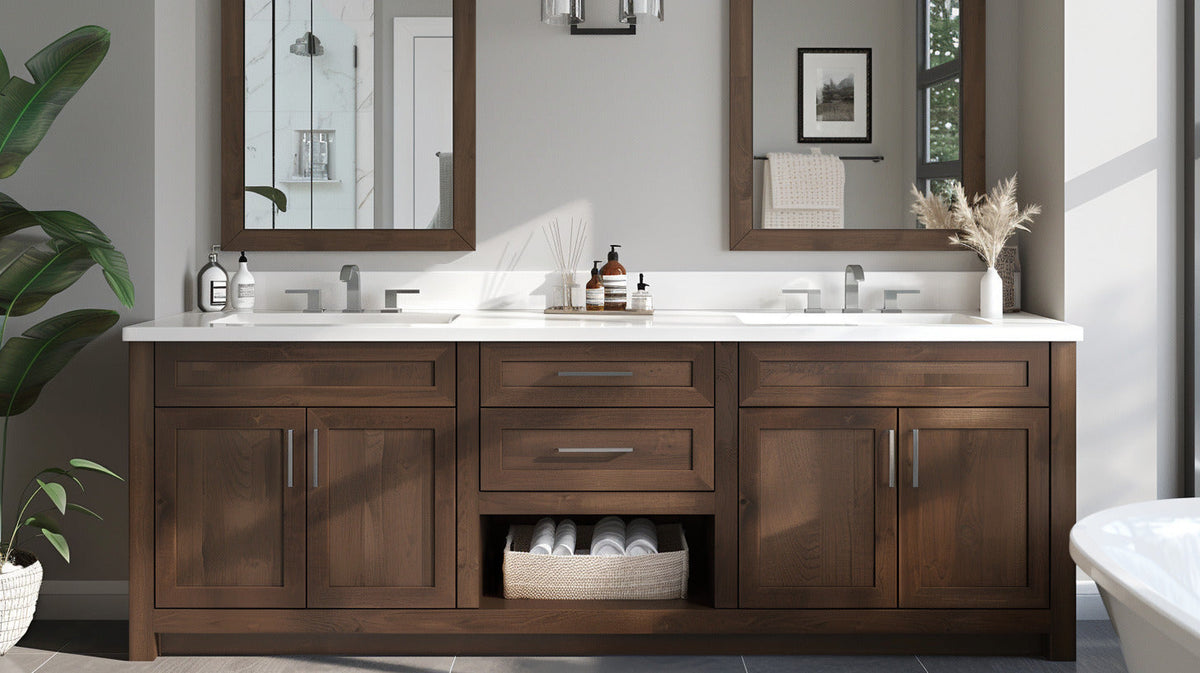
Surprises like a rotted subfloor or mold behind the wall only show up after demolition. Subtract 10 to 20 percent from your total for those. If your limit is $5,000 and you reserve 15 percent, you have about $4,250 to plan with. Treat that as a ceiling, not a target. Our bathroom vanity price index shows what vanities cost by width so you can price the biggest single item early.

Prioritize Your Bathroom Remodel Goals
List every change you would love, then rank them by need. Cheap fixes like clean grout and a new shower curtain often change the room more than you expect.
Fix Function and Safety First
Before anything cosmetic, deal with:
- Poor ventilation that leads to mold
- Leaks under the sink or in the shower
- Faulty outlets and lights near water
- Slippery or unstable footing in the shower
Leaks and mold get worse the longer you wait, and they can ruin the new finishes you are about to buy.
Then Spend on High-Impact Upgrades
With repairs done, put money where you will notice it every day:
- A fresh coat of paint on the walls and cabinets
- Updated lighting
- A new faucet and hardware
- Durable, moisture-resistant flooring
- A new shower curtain and towels
Choose a few standouts and let the rest wait for another year.
Saving on Materials
Materials sway the total more than almost any other line. Upcycling and smart substitutions let you modernize without a big bill.
Upcycle What You Already Have
- Sand and repaint a sound wood vanity
- Update cabinets with new knobs and pulls
- Repaint or restyle an old mirror frame
- Convert a dresser or console into a vanity, with a proper sealed top and plumbing cutouts
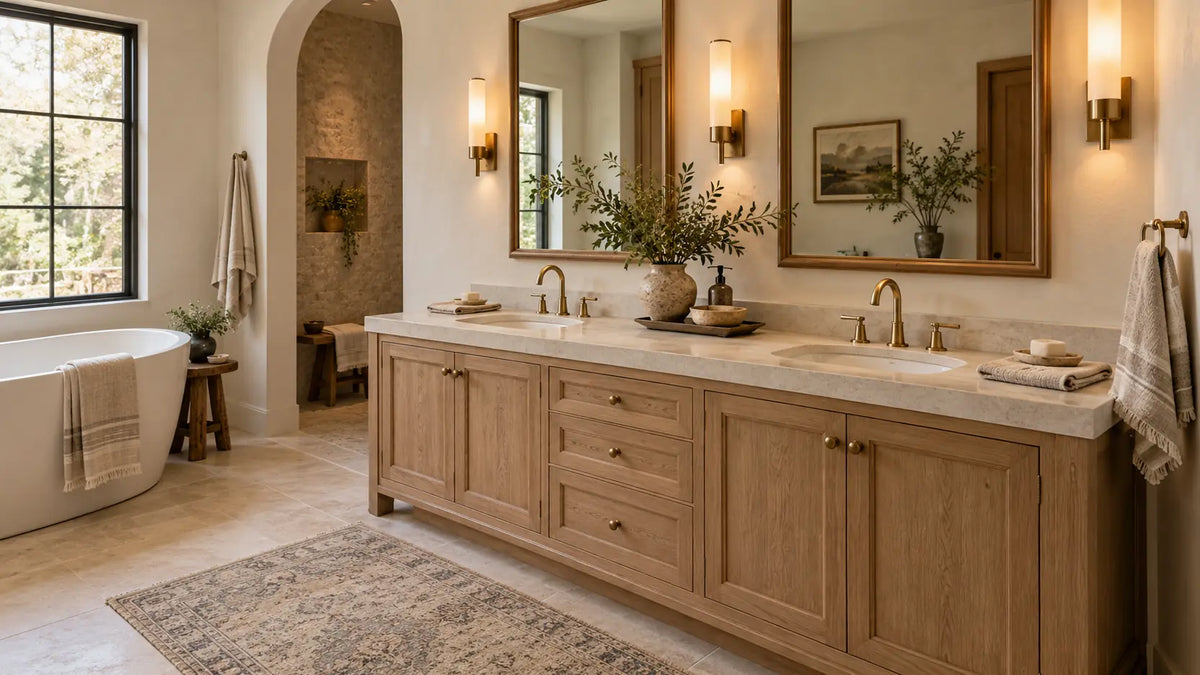
Thrift shops and Habitat for Humanity ReStores are good places to find unusual fixtures and furniture. If your vanity is too far gone to repaint, a shaker vanity in a painted finish gives you the same fresh look with a new cabinet behind it.

Consider Lower-Cost Flooring
Sheet vinyl and luxury vinyl plank handle moisture well and cost much less than tile installed. Choose a textured finish for grip, and have the subfloor checked before you cover it.
Consider Acrylic Tub and Shower Units
Factory-molded acrylic tub surrounds cost far less than a full tile job, install faster, and have no grout lines to collect grime. Buy a size that fits your existing layout so you avoid new plumbing.
Paint and Panels Instead of Tile
Ceramic tile looks great, but labor drives the cost. Moisture-resistant paint on walls outside the shower, or water-resistant panels, give a similar clean look for much less. Keep tile for the shower and the splash zone, where it does the most work.
DIY or Professional
Doing the simple work yourself is the biggest labor saver. Leave anything involving electrical, major plumbing, or structure to licensed professionals.
| DIY | Leave to the Pros |
|---|---|
| Demo of vanities or wall surfaces | Major plumbing like moving pipes or drains |
| Installing new flooring | Electrical (new vent fans, lighting, outlets) |
| Simple drywall mudding/taping | New cabinetry installation |
| Painting | Quartz or solid surface fab/install for countertops |
| Minor grout refresh | Structural changes |
| Building floating shelves | Major tile work |
| Removing old caulk/sealants | Refinishing tubs |
| Basic caulking around trim | Frameless glass shower doors |
If a quote comes back high, ask the contractor to price only the pieces you can't do yourself. Use their expertise where it protects safety and long-term value.
Plan Carefully to Control Costs
Map Your Layout First
Work within the existing footprint. Sketch the room to scale with a free floor planning tool or graph paper, and test where the vanity, mirror, and storage will go before you buy anything. A clear plan also helps contractors work efficiently.
Get Several Quotes
Never accept the first quote. Compare at least three for any work you hire out, and look for contractors who answer questions clearly and explain their payment terms.
Minimize Demolition
Do not tear out what only needs refreshing. In some cases an acrylic insert can go over damaged wall tile, which saves demolition time. Every cabinet, floor, or wall you keep is money you keep.
Schedule Trades in Order
Plumbing and electrical go in before drywall and paint. Booking crews in sequence, with little overlap, avoids delays and rework.
Making a Small Bathroom Feel Larger
In a tight room, a few layout decisions matter more than the budget. Our small bathroom vanities are sized for exactly this.

Lift Fixtures Off the Floor
A wall-mounted vanity shows more floor and makes cleaning easier, which makes the room look larger. A floating bathroom vanity does this without losing storage, which a pedestal sink cannot match. Wall-hung toilets save visual space too, but they need a carrier frame inside the wall, so treat them as a space upgrade rather than a savings.
Use Vertical Storage
Floating shelves and a slim ladder rack keep towels and supplies off the floor and draw the eye up. Skip bulky floor cabinets in a narrow room.
Layer the Lighting
Put task lighting at the vanity and softer ambient light overhead. Sconces and a pendant add a focal point, and any fixture over a tub or shower should be rated for damp or wet locations. A large mirror from our bathroom mirrors doubles the light.
Zone the Space
A frosted glass panel can hide the toilet, and a small divider can separate the vanity from the shower. Careful zoning makes a small bath feel designed instead of cramped.
Affordable Design Touches
Add Color with Confidence
White keeps a bathroom bright, but color adds personality. A teal or navy vanity, rust towels, or brass hardware gives the room a point of view. Choose one palette and repeat it in a few accessories.

Use Luxe Materials as Accents
Save pricey materials for small areas. A marble herringbone backsplash behind the vanity makes a bigger statement than a marble top, and a statement mirror adds texture without a big spend.
Add Greenery
Succulents, aloe, and bamboo thrive in bright, humid rooms. Without a window, faux eucalyptus or boxwood works well. Keep plants and shelves clear of the shower spray.
Hang Art
Bare walls look unfinished. Framed prints, a mirror leaned against the wall, or a removable mural can fill the space, as long as nothing hangs where it will get soaked.
Maintenance That Protects Your Investment
- Check for leaks. Inspect supply lines and drains regularly, because small drips cause big damage.
- Reseal grout. Look at grout and caulk a few times a year and repair cracks quickly.
- Deep clean on a schedule. Use products that are safe for each material and clean before buildup sets in.
Put a quarterly reminder on your calendar. A few hours of attention a year keeps a budget remodel looking good for a long time.
A bathroom remodel does not have to be a financial strain. Set the budget, fix what is broken, spend on the pieces you use daily, and keep the maintenance up. If you want help picking the vanity, send me your layout and I will point you to the right size. You've got this.
Explore our Bathroom Vanities with Sink Included


Explore our Shaker Bathroom Vanities


Frequently Asked Questions

Todd Harmon
Budget bathrooms succeed when the vanity is right, because it is the one piece that sets the size, storage, and style of the room. I help people choose a vanity that fits the plan they already have. With over two decades in e-commerce and product curation, Todd built BathGems on a simple idea: a bathroom should feel as collected and considered as the rest of the home. He sources every vanity and fixture in the BathGems catalog the way a designer pulls samples, weighing material, proportion, finish quality, and how a piece actually lives in a real room over time.
 Pick BathGems as a preferred source and Google will show you more of our design guides in Top Stories and AI results. Takes one tap while signed in to Google.